The year of the “Wasian”
Social media is turning Asian-white identity into an aesthetic
Eliza Lee
Wikimedia Commons / James Lee via Pexels / Corrie Maurik
Like many, the first time I heard the term “Wasian” was through social media. The Gen Z term for East Asian–white mixed people was passed to me through a white friend who had come across it on TikTok in the summer of 2021. Recently, the term has come roaring back into my life with a surge of Asian-white content on my feed. 2026, we are told, is “the year of the Wasian.”
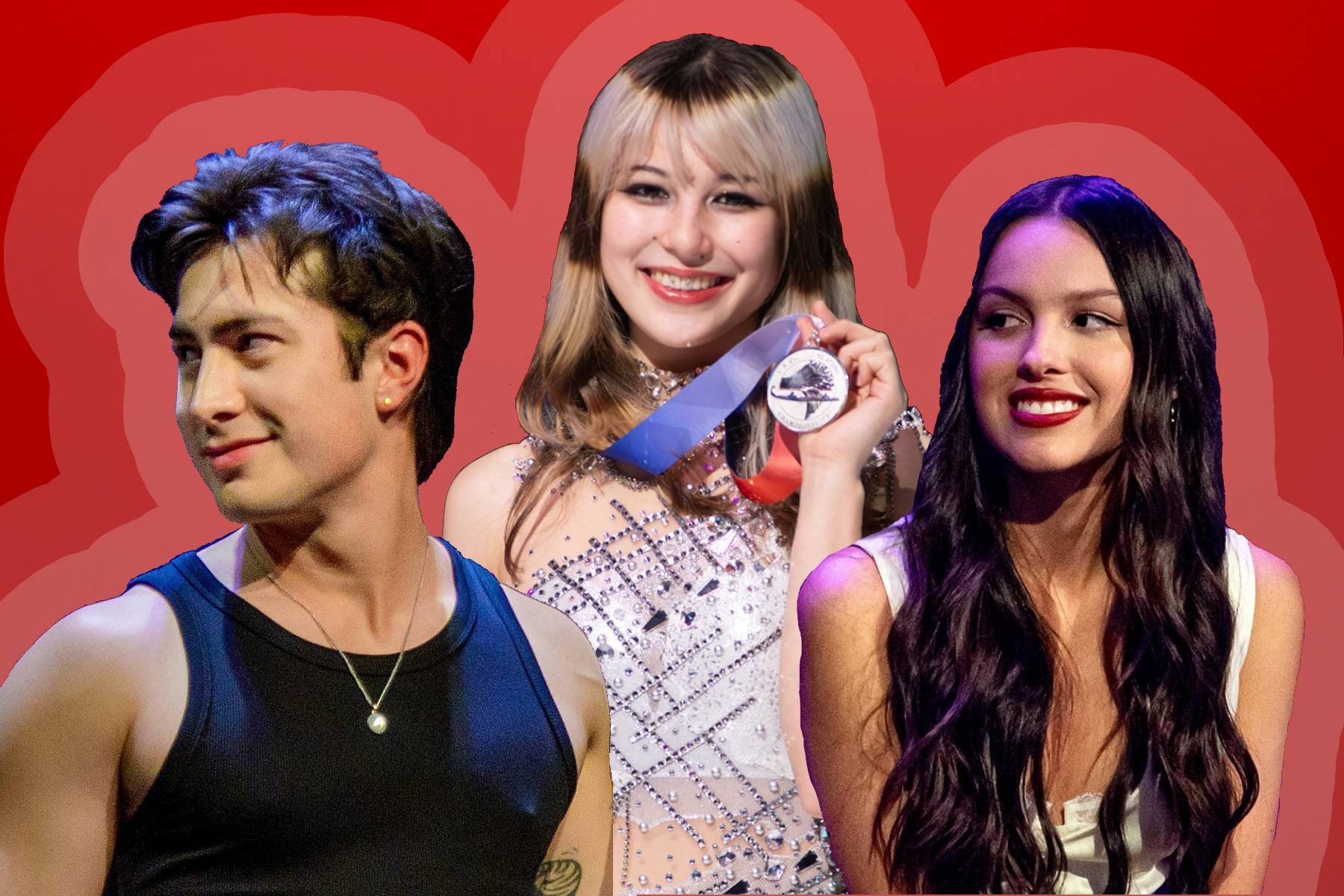
The rise of a new generation of Asian-white celebrities is at the centre point of this moment. First came the breakout role of Canadian actor Hudson Williams in Heated Rivalry. Then, the gold-medal-winning performances of champion American figure skater Alysa Liu took off on social media. But their features in indie pop star Laufey’s “Madwoman” music video cemented their claims to internet fame. The video, featuring a star-studded Asian-white cast, has amassed over 19 million views on YouTube since its release in mid-April. Some term this band of superstars the “Wasian Avengers.” Others cast their roles in a fictional Wasian royal court with other famous celebrities: maybe Williams as prince, Olivia Rodrigo as princess, and Keanu Reeves as king.
It has been strange to see a racial label crystallize in the mainstream through social media celebrity cultures, which are themselves notoriously centred on idealized bodies and lives. A search of “Wasian” on TikTok yields countless fan edits of heartthrob lead actors, gold-medal winners, and pop stars, smouldering for the camera and sipping drinks outside Laufey’s pool. The virality of these stars has even prompted some to playfully remind social media users that not all Wasians are glamorous and successful. “What about the Wasians that are kind of just normal-looking guys?” demands one Instagram user. Though told as a joke, it’s worth asking in a context where Asian and mixed people—particularly women—are seen as foreign and are hypersexualized. Being Wasian is cool and different, but not normal.
Beyond celebrity discourse, this wave of Wasian content emphasizes the perceived uniqueness of being mixed. One trend sees creators offering timelines of childhood photos as a “rare aesthetic,” like “growing up [W]asian and looking white as a baby and more Asian as you get older” or vice-versa. I encountered the same post comparing Wasians with Asian fathers to rare Pokémon in multiple group chats over the last few months. This content speaks to how Asian woman–white man couples are often seen as a prototype for multiracial relationships, an idea tied to racist and heteronormative stereotypes that fetishize Asian women and portray Asian men as sexless. These Wasian posts treat Asian-white people as quirky exceptions to the white status quo.
These attitudes are not unique to social media. In Canada and elsewhere, mixed people are often perceived as icons of multiculturalism ushering in a new, colourblind era. Celebrating them through content that fixates on their beauty, uniqueness, and fame risks linking multiracial identities to this same sense of post-racial coolness. The lived realities of Asian-white people, including experiences of racism and monoracism, go unspoken in these trends. Instead, they encourage a way of looking at multiracial bodies that exoticizes them.
Whiteness, too, is central to the Wasian aesthetics dominating social media. While this virality has spurred Asian-white people to seek each other out, both on and offline, multiracial community building has remained largely centred upon whiteness. For all this discourse on Wasians, the current moment has not propelled non-white mixed Asian folks, including mixed Black, Latinx, and South Asian people, to greater visibility.
No better concept exemplifies this exclusionary attitude than the term “Wasia,” a fantasy republic populated by Asian-white citizens. A “Kingdom of Wasia” Discord server advertised on TikTok is over 3,500 members strong. The controversial meetup for Asian-white people in New York City has been branded as a visit to “Wasia.” I can relate to the desire for a world where multiracial identities are accepted and celebrated. But it’s telling that, to imagine such a place, Wasians reach for the very European monarchical nation-states that sought to dominate Asia over the course of centuries and whose colonial legacies are ongoing.
What we are left with is a hollow representation of a select few mixed-Asian identities that merely shines on the surface. This so-called Wasian renaissance paints Asian-white identity as an exclusive club, playing into exoticization and turning away from opportunities for wider mixed-Asian community building. Being Wasian is in, but the spotlight is fleeting. So long as being Asian-white remains an internet aesthetic, this glimmer of visibility will soon disappear in algorithm turnover.
Photo: Hudson Williams: TKA201, Wikimedia Commons (CC BY 4.0) / Alysa Liu: SpiritedMichelle, Wikimedia Commons (CC BY 4.0) / Olivia Rodrigo: Justin Higuchi, Wikimedia Commons (CC BY 2.0)