Up in smoke
Tracking the damage caused by wildfires in 2025
Nancy Dutra
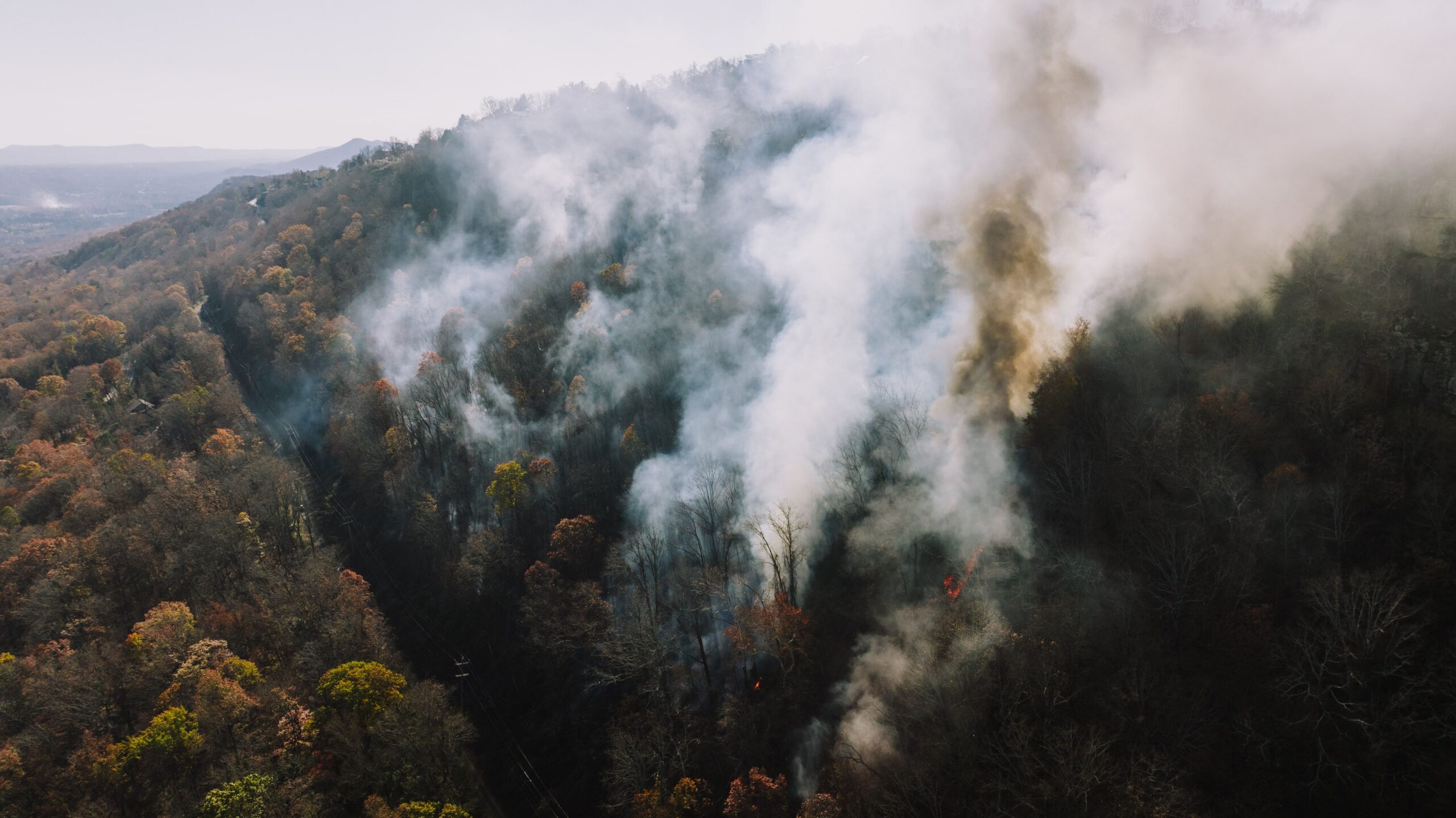
Photo by K via Pexels
Wildfires play an integral role in forest regeneration by clearing underbrush, recycling nutrients, and triggering seed release. But with climate change, their severity and scale have increased sharply, often surpassing the natural range in which they provide ecological benefits. Reliable data on deaths and property loss is limited, since most reported fire-related fatalities involve structural fires rather than wildland ones, and longer-term effects such as smoke-related illness are hard to track. In 2023—Canada’s worst wildfire year on record—fires burned 15 million hectares, six times the 10-year national average. Activity has remained high: 2025 now ranks as the second-worst year on record. As of November 19, 6,125 wildfires had burned 8,922,148 million hectares, more than twice the 10-year average of 4,178,669 million hectares. Wildfire smoke from fires across Canada, including the Prairies, affected air quality in Toronto and Montreal, with Toronto ranking among the world’s 10 most polluted cities.
The national response was widespread. The Red Cross counted 52,000 evacuees last year, staging its largest domestic wildfire response operation in recent history. As of late August, they were running a shelter with capacity for over 3,000 people, had deployed 1,200 personnel, and secured 815 flights for 10,000 people and 200,000 hotel nights.
On October 30, Public Safety Canada reported that more than 85,000 people had been evacuated across Canada since April, including over 45,000 from First Nations communities. Here is a closer look at how wildfire activity played out across the country in 2025.
Atlantic Region
The Atlantic provinces had an unprecedented wildfire season. According to Natural Resources Canada, New Brunswick recorded 391 fires, 81 percent above its 10-year average of 216. The province closed all Crown land in August due to extreme danger, and record fires there altered bird habitats, leaving some species vulnerable.
Nova Scotia saw 150 fires and issued a province-wide forest closure in August. The province extended its wildfire season to the end of October. Minister of Natural Resources Tory Rushton said in a release that the province has never seen wildfires so late in the season. The Red Cross reported that more than 650 people had to evacuate.
Newfoundland and Labrador saw 229 fires, a 144 percent increase over its 10-year average of 94. According to the Red Cross, over 7,200 people had been evacuated from their homes at some point by early September.
Ontario
Ontario had 560 wildfires in 2025, 20 percent below the 10-year average of 701. However, the total area burned reached 597,515 hectares, nearly three times the 10-year average.
During the region’s largest wildfire, hundreds of people from Deer Lake First Nation (near Thunder Bay) were evacuated to Toronto and stranded there for a month. Thousands of people from remote First Nations in Northwestern Ontario flew to southern Ontario and Winnipeg to escape the fires. After receiving support from other provinces, as well as Wisconsin, the province says it is adding 68 permanent firefighting and support staff positions for the 2026 wildfire season.
Quebec
According to the Société de protection des forêts contre le feu (SOPFEU), Quebec recorded 528 fires in 2025, about 6.5 percent more than its 10-year average of 495, with 1,313.7 hectares burned within the intensive protection zone in the south of the province, though total provincial area burned may have been higher.
The Prairies
Alberta saw 1,155 fires, with 674,535 hectares burned—53 percent above its 10-year average of 438,653 hectares. Saskatchewan recorded 484 fires, 16 percent above its 10-year average, with 2,896,258 hectares burned. By September 5, the Red Cross’s count of those evacuated in the province had climbed to more than 16,100 people. Manitoba had 430 fires—29 percent above average—with 2,169,092 hectares burned. By September 9, the Red Cross registered over 32,600 evacuated people from over 12,500 households. More than 7,300 of those households were reported by Indigenous Services Canada.
The Territories
Yukon experienced 165 fires (contrasted with its 10-year average of 134) and the Northwest Territories saw 197, 12 percent above the 10-year average of 175. Yukon recorded 169,217 hectares burned and the Northwest Territories 1,345,884 hectares. Data for Nunavut was not available; however, smoke from other regions affected the territory’s air quality.
In July, the federal and Yukon governments announced a combined investment of more than $17 million to support fuel reduction and FireSmart measures in southern Yukon communities.
British Columbia
B.C. reported more than 1,350 wildfires in 2025, a 7 percent decrease from the 10-year average of 1,456. Despite fewer fires, the total area burned reached 885,783 hectares—above the long-term average of 750,846 hectares. There were 42 evacuation orders, compared to 51 last year and 208 in 2023.