A community uprooted
An urban farm in Edmonton is forced to move
Adeline Panamaroff
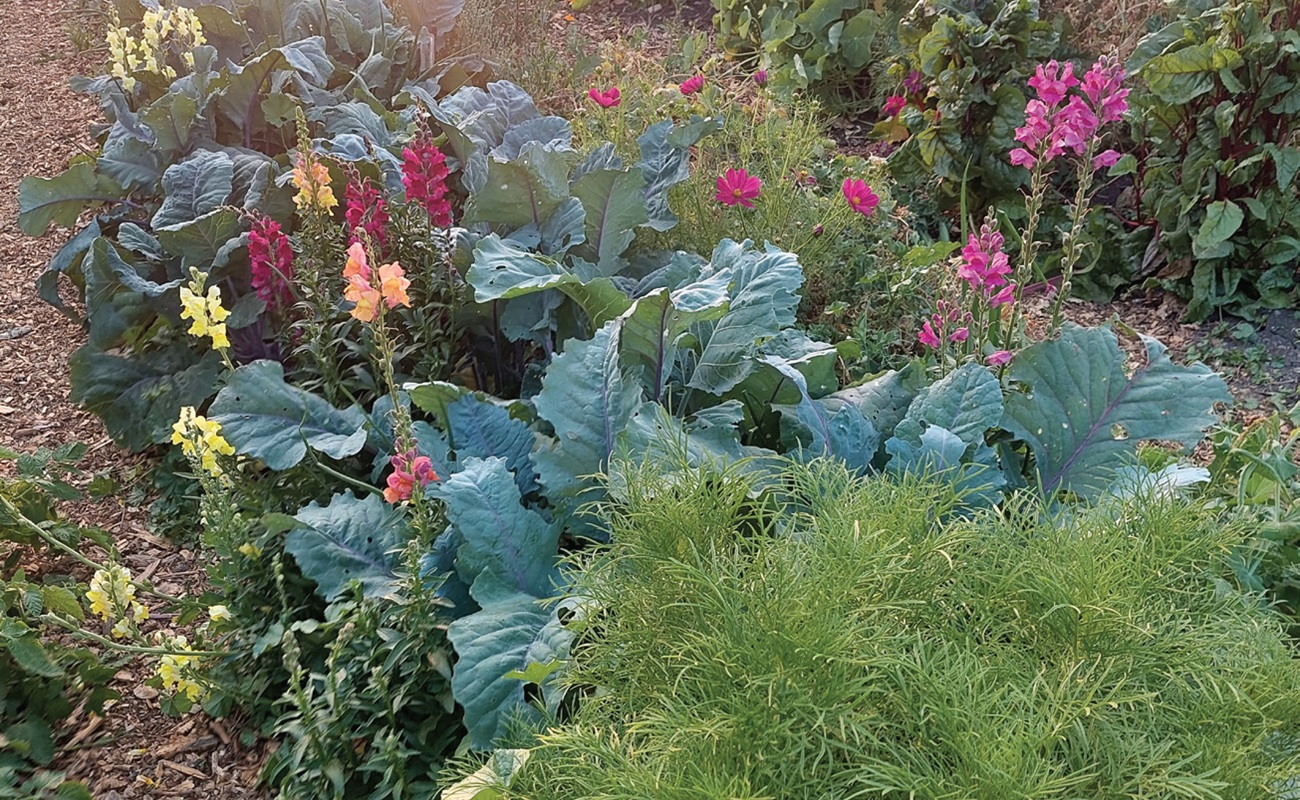
Photo courtesy of Explore Edmonton Urban Farm
On the north side of Edmonton, at the corner of 113 Avenue and 79 Street, several lots laid vacant for years. That was until Northlands, an agricultural society, took over management of the land.
An employee of the society worked to establish an urban farm on the site. In 2014 it became a lettuce-growing operation. In 2018 that operation pulled out and Northlands invited community members to farm the space. Once Northlands stopped running in 2021, Explore Edmonton took over the farm’s administration.
Over its 11 years, this site served as an important source of food security within the city’s core. It’s shared community plots with groups like Right at Home Housing Society, an affordable housing organization. It’s been a place of education on the subject of sustainable horticulture, as well as an agricultural incubation space where gardeners could experiment with different techniques in a financially low risk environment. Often food was simply passed right through the fence to those in need, and food was also brought to a food share in North Glenora.
Over time, the urban farm’s name changed, but at its core, it always fulfilled the same purpose. It offered public programming that brought in school groups for tours, workshops, a venue for live music, and demonstrations. It brought city people in and showed them what urban agriculture could be. It’s been tended by nearly 300 members, including many newcomers to Edmonton, and served as home to one man’s small tree nursery. But all of that ended last summer, when the garden was suddenly closed.
For the first time in over a decade, the urban farm’s identity is changing: the site is slated to become a storm water pond, because the existing storm sewer system won’t be able to handle the level of drainage that is expected to increase with densification in the area.
The gardeners had always been told that the land might eventually be sold. Still, when it came under sale consideration in 2023-2024, the notice felt sudden and not timely for gardeners like Pam McKinnon-Coco, who had just put in a lot of garlic for the next growing season. “[The land] was a cornerstone of community learning, sharing and advocacy, more than just physical structures. You train the soil and build trust and relationships with people of all ages and backgrounds,” McKinnon-Coco says.
The tree farmer, Dustin Bajer, had to relocate hundreds of young trees in a two-month period. “There’s a lot of people out there who would love to get into urban ag, but there’s not a lot of us who would be able to quit their day jobs to do it,” he says. Having access to some land, he says, means people can experiment and play.
Some of the gardeners rallied with letters and protests to the City of Edmonton, but the space couldn’t be saved. The displaced gardeners have been offered a few spots in other community gardens, and there’s a plan to create a new urban farm in the Exhibition Lands, due to open in 2026.
But McKinnon-Coco has felt a loss of community as her fellow urban farmers scattered to wherever they could find new space. Bajer sees it as a loss to the city as a whole if this model of urban agriculture isn’t rebuilt somewhere else. Not having that space to learn and innovate before scaling up to grow in larger areas, he says, will slow down the progress of establishing a strong urban agricultural presence in Edmonton.