A fighting chance
The Toronto Palestine Film Festival supports works in progress
Alexa Margorian
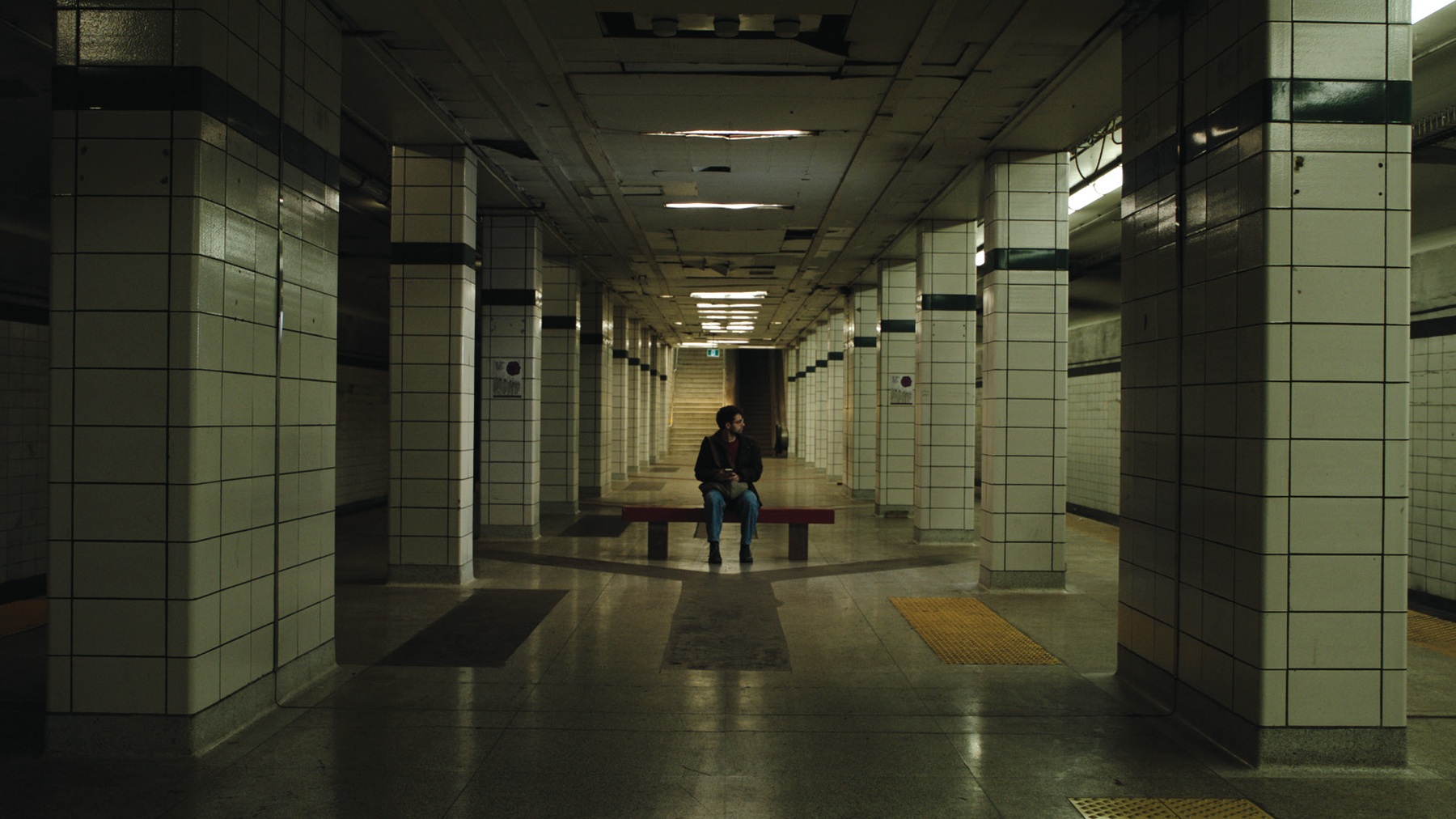
When Rimah Jabr first applied to the Toronto Palestine Film Festival’s (TPFF) 2025 residency, she was so unsure about being able to accurately address anti-Palestinian racism that she withdrew her submission. Jabr wasn’t used to creating work for commissioned themes and worried about the compromises she’d have to make.
“As an artist, I was like, do I want to start making film based on a theme that is already decided, to fit, to serve certain criteria?” Jabr says. “So I was hesitant.” But someone from TPFF called her after she withdrew, and they told her she had the freedom to make whatever she wanted. TPFF knew she understood the theme, urging her to reconsider.
That assurance gave her the confidence to return to the project. This is how You’ve Seen It on TV was born. The short film, which was screened by TPFF in September as a work-in-progress, follows Zain, a graduate student, who is bizarrely cross-examined by his stalker about an old social media post he created. The situation is very like a play he’s in, and slowly, he realizes he’s always being watched. The film blurs the distinction between reality and fiction, exploring how Palestinian anger and responses to violence is distorted and surveilled in the public imagination.
“There is this kind of, I would say, surreal absurdism about the film when you go, like you don’t know who’s watching what,” Jabr explains.
Originally from Nablus, Palestine, Jabr is currently a PhD candidate in theatre and performance studies at York University. Her shift to filmmaking began during the COVID-19 lockdowns, when cancelled theatre productions pushed her to experiment with a new medium.
Jabr participated in TPFF’s 2024 residency, producing her debut short De-Clutter which went on to screen at international short film festivals and garnered Jabr numerous awards.
Part of Jabr’s hesitancy this time around was that the pitch for her film was “really ambitious”, which conflicted with the small budget and short timeline. After being accepted to the residency in May, she had until August 31 to complete the film.
Along with mentorship from established filmmakers, TPFF provides artists with a $5,000 grant. Despite securing additional funding from the Arab Canadian Lawyers Association and Charles Street Video, a Toronto-based nonprofit production organization, Jabr’s work on the film is ongoing. The quick turnaround meant that Jabr couldn’t apply for additional grants, and though most of the cast and crew volunteered their time, unexpected costs inflated the production budget. Jabr was able to film in the Factory Theatre for free, but that meant that any work conducted there needed a paid union representative to be present. For up-and-coming filmmakers, these kinds of surprises add up.
With additional funding, Jabr hopes to complete the film by November, as she works with an editor to clean up the film’s pacing and adds a score to help heighten the tension that drives the short. TPFF screened the nearly complete film as part of their ongoing support of Jabr. Having now shed her initial skepticism around telling stories that could be deemed didactic, Jabr is glad she participated in TPFF’s residency after all.
“And this is always the dilemma for every Palestinian artist, and I heard that from many people. Are we Palestinians first, artists second, or are we artists? And it happens that we are Palestinians, and it’s very difficult. It’s very difficult because you want to be the artist and that’s it, but you have this load and responsibility,” Jabr says.
In the face of the genocide in Gaza at the hands of Israel, where so many innocent Palestinian lives were lost and destroyed, Jabr is looking forward to exploring Palestinian identity more explicitly in her work.
“We have to fight for our narrative. Yes, they erased the space, the architecture, the history, the people, but the story will live. This is what we are fighting for now,” Jabr says.