Nîcisânak on the river’s edge
A memoir of queer healing in Cumberland House Cree Nation
Russell McAuley
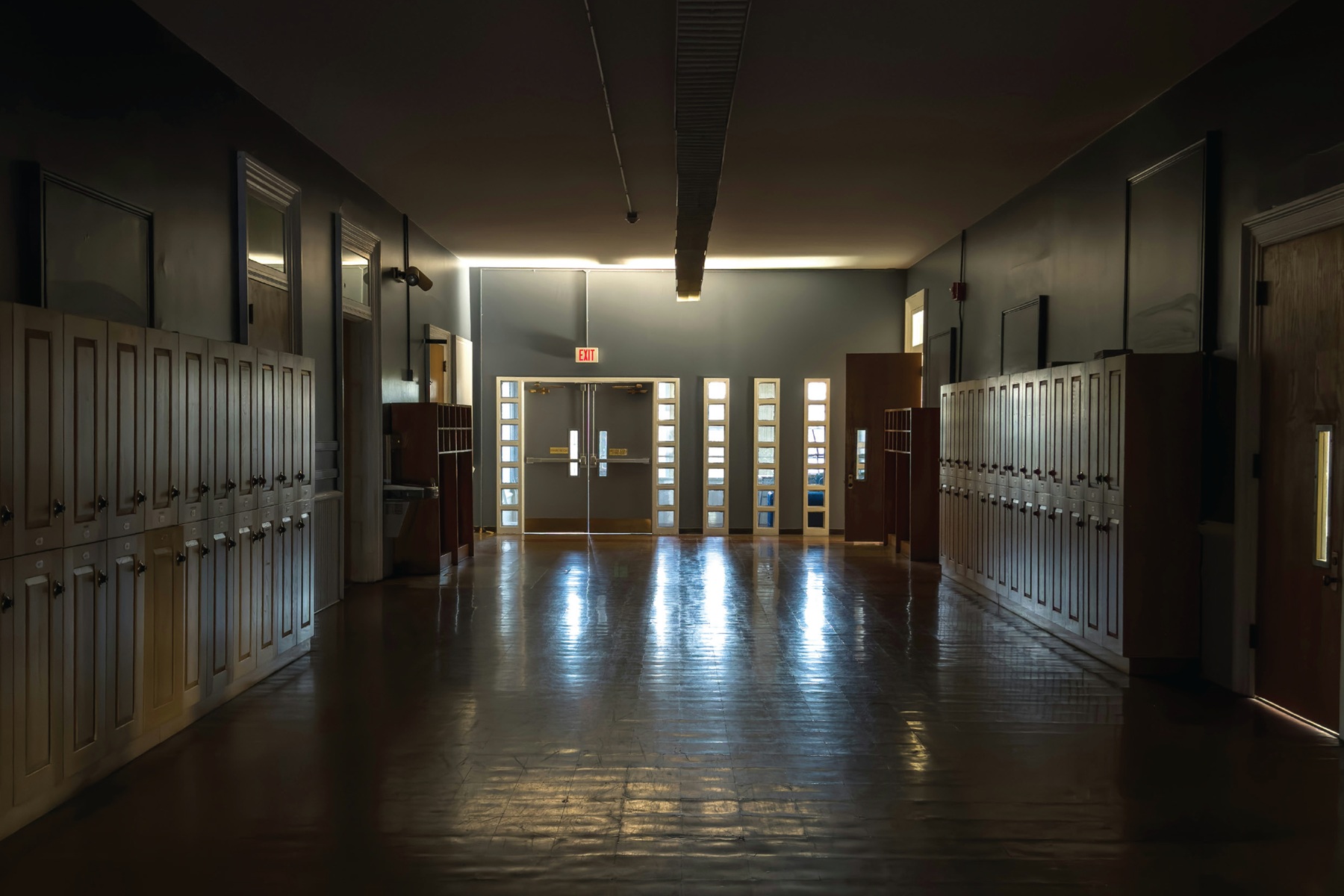
Photo by Tim Bish
It’s a Wednesday between classes just before the 2025 winter break and the hallway at Nisto Awasisak Memorial School is a rush of hoodies, backpack zippers, and winter boots squeaking on tile.
“Iye, real gay,” one of the high school boys says, loud enough to cut through the noise. Iye—Cree slang for gross, nasty—lands in the air the way it always has here: casual, heavy, like no one is supposed to notice.
Before the old shame can rise up in the back of my throat, another voice answers from somewhere in the knot of middle years kids by the lockers.
“What’s wrong with being gay?”
There’s a beat of silence, just long enough for my heart to trip. A couple of other kids jump in, overlapping, awkward, but sure.
“Yeah?! There’s nothing wrong with being gay.”
They say it like a dare, like a shield. They say it in the hallway of NAMS, in Cumberland House Cree Nation.
For a moment I just stand there, halfway between my classroom and the staff room, holding a colossal stack of photocopies that suddenly feels very small compared to the words floating between these kids. Back when I came out to close friends in 2005, and then my parents in 2007 right before graduating high school, I couldn’t have imagined anyone speaking up for us in the open like this, let alone in the middle of the day, by the Grade 8 lockers.
I knew I was getting out of Cumberland somehow—won a scholarship that paid my tuition and got me started in university. My band funded my first degree in sociology, which led to work as a community outreach worker and case manager for at-risk families or those who’d already had kids taken by social services. I had to leave that job fast after witnessing child apprehensions—the screams of those kids being torn from their mothers still echo.
From there, I wanted to teach about racism and discrimination, so I joined the Indian Teacher Education Program (ITEP) at University of Saskatchewan, graduating in 2018. I felt it was the best fit because the program focused on Indigenous knowledge systems and unlike my first degree, this time I was in classrooms filled with Indigenous peers from around various First Nations communities and urban Indians alike. Proud of my time at U of S, but they’re problematic—no shortage of issues, like too few Indigenous tenured professors, and how they treated one Two-Spirit friend of mine so badly he had to leave.
Thankfully, Cumberland House now has teacher education cohorts letting community members earn degrees without leaving—a luxury I didn’t have, but leaving benefited me. I’m grateful. Earned my master’s in Educational Foundations, even went PhD candidate before withdrawing—heart wasn’t in it. I’ll finish one day, just not at U of S and not rushed. Now I’m back as a high school teacher since fall 2025 and sessional lecturer for these local programs, even teaching colleagues who work here, preparing the next cohort who’ll stay and serve our kids.
*
Back in high school, I was the dark, thick, too-soft middle child in a family that used slurs like jokes and flinched at anything too colourful, too emotional, too me. Today I call myself “thick” instead of fat—I like my thick body, know many others do too, despite colonial beauty standards, especially in white gay male culture. But I don’t want to fear the word fat; I just don’t use it often, respecting how it’s been weaponized for those sensitive to it. I walked these same hallways trying to shrink myself, trying not to be noticed as brown, as queer, as wrong. Now I walk them as Russell—ask my students to use my first name, no “Mr.” or “sir.” Creates equality. We’re no better or worse than each other; all equal in Creator’s eyes.
Some teachers here were my classmates. One or two sat in my U of S class, calling me prof while we unpacked racism and homophobia in schools like this. In the evenings, I teach teacher candidates who’ll soon stand where I’m standing, by these lockers, hearing kids test what’s possible to say.
“Get to class,” I call down the hallway, voice light, neutral, teacher-like. The boys peel toward math, socials, science. “Gay” hangs another second, but feels different now—less weapon, more question finally spoken.
As the hallway empties, I wonder who that brave kid will grow up to be, and who I might’ve been if I’d heard a voice like that back then.
I lean against the cool cinderblock wall, photocopies clutched too tight. Twenty years collapse into one breath, pulling me back to 2005, down by the Cumberland House river where water moved slow and muddy under late summer sun.
My two best friends sat on a fallen log, tossing pebbles into the current, patient but curious. I’d told them on the walk down that I had something important to share, but words stuck like burrs. Paced the riverbank over trampled grass, well over an hour to spit it out. Years before Saskatoon, before university gave me “Two-Spirit” or “Indigiqueer”—“gay” was all I had, and it burned.
Their reactions balanced each other. One affirmed me, the other stung. It became a kind of template, shaping how I’d handle every new disclosure afterward, through the endless, unfolding moments when queer people must come out again and again. After “I’m gay” landed that first time, weight lifted so fast I felt light-headed, floating over the river. Regardless of days, weeks, years ahead, I’d told my closest friends. A crack in the armour, letting me breathe through homophobia everywhere: school whispers, community side-eyes, family cuts.
I shake the memory, push off the wall toward class. Still catch myself deepening my voice around men at the grocery or events—presuming they’re straight, pitching lower for smooth passage. Gender and sexuality fluid for everyone; most never test those waters. Used to hate the habit, that safety flinch. Now just annoying, familiar, even as I live openly queer—advocating, educating, holding space.
*
Five-six years ago, first back teaching here, started “Safe Space” after school. Left for master’s—advisor then did not accept online students, ironic post-COVID. Knew I’d return. Now fiancé Cody—who helped me move out once—packed up with me again. Exciting: give back to my community, reconnect to the land, relearn Cree I’ve carried quiet. Cody subs at NAMS now, surreal walking in together, everyone knowing we’re coupled, most welcoming enthusiastically. Some disapprove—what can they do? Who are they to say? Empowering, educated, equipped to deserve myself. Mom teaches here too, come far accepting her queer son—not that nervous dependent kid anymore.
Hallway echo lingers with heavier failures. High school students from my 2019-2020 year, pushed through without tools for next steps, landing positions they can’t escape. Heartbreaking sign of federal education for our communities. Not that different from the residential school stories I grew up listening to. We perpetuate colonial violence, only this time by our own hands. Deeper wound: queer student I bonded with pre-pandemic. Journal entries peeled their world—I advocate journaling hard. Safe space to ask anything, share life or class thoughts; I respond as trusted adult, help however. One entry: proud of gay teacher, hope for “normal” life. Then gut-punch—awful family, community treatment. Cried reading alone after school. Wish I’d taught sooner. All kids deserve role models. Everyone needs real successful queer Indigenous people, not side characters. Today, one student, not queer, raves Heated Rivalry—gay hockey players in book/HBO series, Canadian tax-funded, warms my heart as she geeks characters. This demonstrates how far my community has come, to allow youth to watch such media and be able to present their thoughts in school. Makes me deliriously happy!
That kid who wrote in their journal didn’t make it. Mirrors university stats on Indigenous youth suicide/overdose, screaming for Two-Spirit/queer-specific research—not broad, but raw intersections: homophobia, transphobia, internalized racism stealing relatives.
Today, more senior students unequipped. Fail them deliberately—not punishment, but passing unprepared no kindness. They deserve skills for beyond, even repeating. How many graduate anyway? How many reach before system, addictions, mental health, poverty grind?
*
On the first day Cody subbed, my mom skipped her daily visit to my classroom. “Wasn’t feeling well,” she texted, but small town—talk flies. “Russell’s man here. Finally see/meet him.” Most enthusiastic; surreal, empowering. Thankfully my mother is more accepting of him at work. I suppose she has no choice. I am hopeful that my parents will invite him to visit their home. Might have to force this relationship building but I’m confident they will learn to love him. In time.
*
Water holds me. It shadows my path: this muddy Saskatchewan river, 2005 confession; Vancouver ocean by coastal mountains—renting a million-dollar North Van home, healing among grandfather peaks, Wet’suwet’en cousin, Coast Salish kin, other Indigenous folks. Mended after Megan—dear friend killed, like too many Indigenous women/Two-Spirit. Dark chapter not public-ready, except National Inquiry MMIWG2S miles to go. Teaching it breaks heart but must for past/present/future relatives.
Vancouver to Edmonton rivers, inner-city Indigenous youth under all-white admins, back home to little Saskatchewan River—land and water protect me. I’ll return favour: advocate, educate, support climate research for clean rivers, communities holding queer kids tight.
RUSSELL MCAULEY is a Two-Spirit educator and writer based in Cumberland House, Saskatchewan, whose work is rooted in Indigenous education, land-based pedagogy, and queer, decolonial thought. With training in sociology, secondary education, and educational foundations, they teach English, history, and computer science, bringing care, rigour, and a deep commitment to inclusive learning spaces.