Dying with dignity
Racialized immigrants are receiving worse end-of-life care
Sonia Persaud
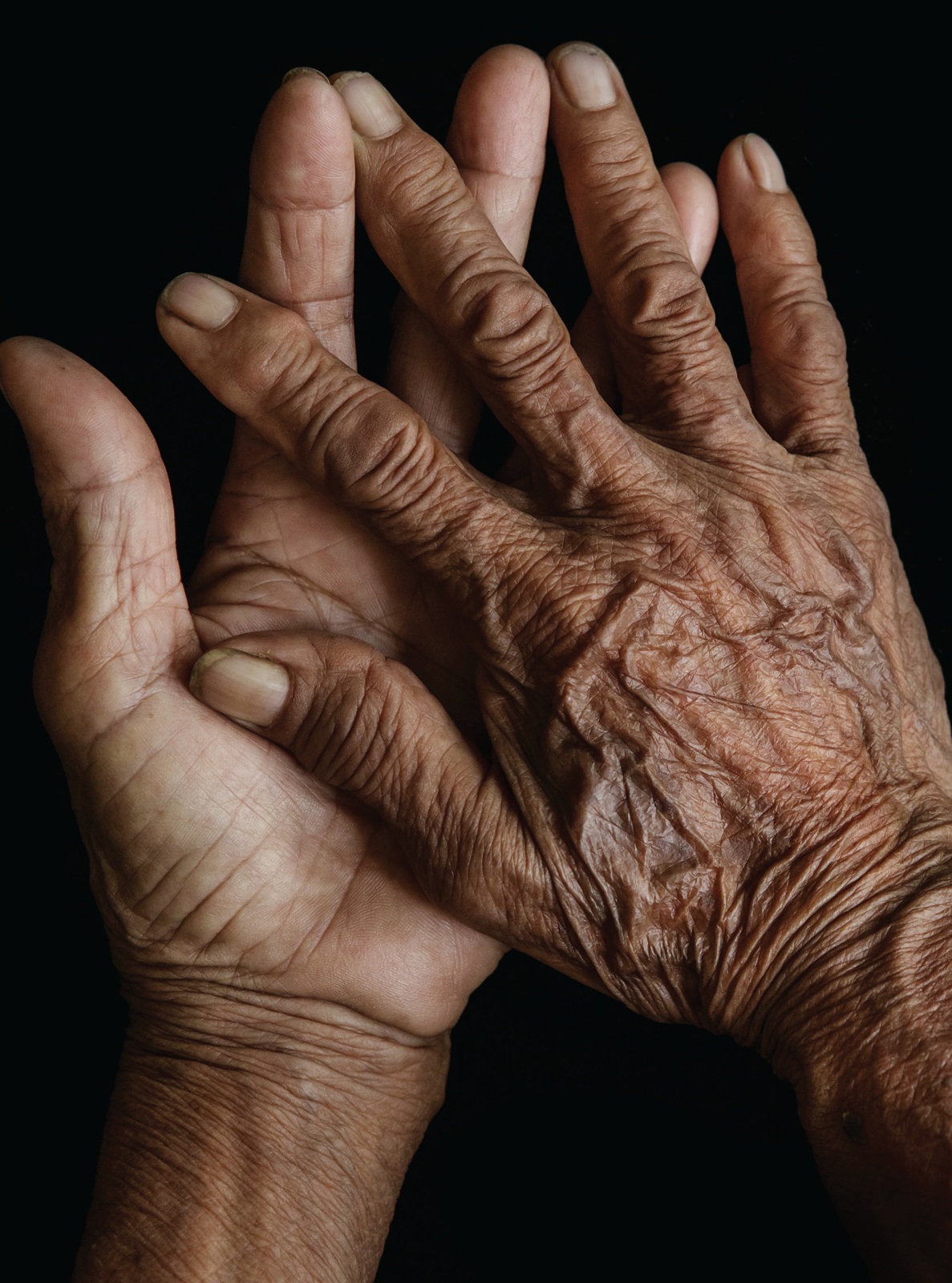
Photo by DONOT6
As Zhi Jia finished junior high, his father was diagnosed with cancer. The two had only recently moved to Canada from China—just father and son—and were still settling into their new life in Calgary.
Jia’s father’s cancer was a rare and often aggressive form called a neuroendocrine carcinoma that occurs in the gut. He went to the emergency room twice, had surgery, then went through chemo.
After a year of chemo, the cancer had spread. There were no more treatments left to try. When his oncologist told Jia’s father he had only a few months to live, he flew to China and brought his sister back to Canada as a temporary caregiver. But while he was there, his condition started to deteriorate. Soon, a palliative care nurse visited their home and offered to help admit Jia’s father to a local hospice.
Jia’s father passed away in that hospice when Jia was 17. Jia’s strongest recollections of the place where his father spent his final days are of quiet rooms and white walls. It was a strange place, and Jia felt afraid. He also felt frustrated and angry at the impending loss of his father and the uncertainty it left him with about his place in the world. His aunt spent her days and nights by his father’s bedside. It was hard for hospice staff to support her because of the language barrier, but Jia says he feels like she got the sense that they tried. Jia, however, stayed away from the hospice as much as he could. At the time, he says, he felt like he didn’t have a place in the hospice because of his immigration and financial status. “I didn’t really know how to be with my dad as he was dying,” he says.
Hospice care is a component of palliative care, a health-care approach that emphasizes relief of pain and symptoms to help patients with serious illnesses live as well as they can for as long as they can. Though the ideas of palliative care align with the end-of-life wishes of many Canadians and others across the world, stigma around it still persists. Immigrant Canadians from a myriad of backgrounds are especially likely to report a lack of knowledge about palliative care—including what it entails and who it’s for—and challenges navigating a health-care system that doesn’t always reflect their needs. These barriers translate into negative health-care outcomes: research suggests that immigrants often end up in palliative care later than long-term residents of Canada and are more likely to experience intensive forms of care toward the end.
One study published in 2017 by researchers affiliated with the Ontario government-funded health-data organization Institute for Clinical Evaluative Sciences (ICES) found that recent immigrants experienced more aggressive forms of treatment in their last six months of life, including intensive care admissions, mechanical ventilation and having a feeding tube. Those from Asia, Africa, South America, and the Caribbean were more likely than long-term Canadian residents to pass away in the ICU. A 2021 ICES study of deaths from cancer in Ontario echoed this finding. At the same time, these immigrants were less likely to receive supportive care—such as home visits from a physician, palliative nurse, or personal support worker. A 2022 study of patients who did receive inpatient palliative care at a Toronto hospital observed that immigrants were more likely to die in hospital and less likely to be discharged to a palliative care unit than those born in Canada.
In these studies, merely being a racialized immigrant is the common thread to an end-of-life experience that is less reflective of what they consider a “good” death. And when palliative care is accessed, it’s often far from culturally competent.
*
After his father passed, Jia studied medicine at the University of Alberta. He touched on cancer and end-of-life treatment while studying, but he hadn’t really come to terms with his grief.
Near the end of medical school, Jia observed patients participating in a group psychotherapy program. He realized the enduring impact that grief had had on these patients—and on himself. He began shadowing palliative care physicians, watching them counsel patients and families. “If I could do some of that for other people, so that other teenagers, children, caregivers, sons and daughters wouldn’t have to go through thinking about it for decades, that it’s their fault—maybe I could do some good,” he recalls. He completed residency training in family medicine and then palliative care.
During his training, Jia returned to the hospice where his father had died. He felt as though this would be the end of his journey—equipped with newfound knowledge and skills in serious illness communication, he was ready to help East Asian immigrant families like his own navigate their end-of-life experiences. But Jia soon realized his efforts to directly translate what he’d learned into Mandarin fell flat.
Jia saw there was more to the picture. His existing clinical communication skills were inadequate to reach these immigrant families, despite the fact that they shared a cultural and linguistic background. At the same time, patients’ families told Jia that they were experiencing guilt, language barriers and a feeling of difference from the health-care staff, just like he had 10 years prior.
“Speaking to those patients and families made me wonder if this was health disparities or inequities that we were seeing unfolding,” Jia says. These experiences launched his interest in research. Nearly 20 years later, Jia is a professor in the University of Toronto’s department of family and community medicine and a clinician investigator at the Sinai Health System studying the cultural dimensions of palliative care for immigrant communities, especially Chinese Canadians.
Jia says the difference between countries’ health-care systems contributes to misconceptions about care. In China, people often choose their specialists and go directly to the hospital when they’re sick. Jia often finds himself explaining the referral pathways used in our health-care system. Because there’s a misalignment between many immigrant patients’ expectations and the way the Canadian system operates, confusion and distrust can ensue when it comes time to access care.
This problem is exacerbated by Canada’s aging population: older adults are the group most likely to access palliative care. As of the 2021 census, 1,971,015 immigrants were 65 or older, meaning language and cultural barriers can pose a challenge for a significant group of residents. (The largest group of over-65 immigrants is from the UK, but Italy, India, China, and the Philippines are the next most common countries of origin.)
Chinese immigrant palliative care patients and their caregivers interviewed by Jia and his team expressed many concerns about engaging with palliative care. Patients shared that times when they were in-between care providers following a referral felt like abandonment, and that language barriers intensified this feeling. One caregiver wondered: “Why did they give up on treatment? Why did they tell us to wait at home for him to die?”
Naheed Dosani, an investigator at the MAP Centre for Urban Health Solutions at Toronto’s St. Michael’s Hospital, has studied how South Asian patients interact with palliative care and observed profound gaps in knowledge—nearly 70 percent of those interviewed for the study had never heard of it. Of those who had, most didn’t know much about it. These findings are echoed in other communities across Canada, with studies also identifying that African Canadian patients in Nova Scotia face limitations in knowledge as a barrier to care.
Some people Dosani interviewed expressed misconceptions about palliative care, such as believing that it represents the end of treatment. Despite this, Dosani says participants emphasized relief of suffering and maintaining comfort as top priorities. “Stigma is still pervasive, but our interviews showed it isn’t rooted in resistance to care,” Dosani says. While culture and faith are often perceived as barriers to engagement with palliative care, this work suggests that lack of exposure and information are instead the primary factors.
*
Across the world, home is the most common place to die. Canada is an anomaly in this way: around 60 percent of Canadians pass away in a hospital. For many immigrants, this means that their death may look starkly different from that of their parents and grandparents. Instead of a familiar home environment, their end-of-life experience will likely be surrounded by the sterile white of a hospital room and punctuated by the regular beeps of a vital sign monitor.
In Canada, patient autonomy is centred, and patients indicate who they would like to involve in their decision-making. The approach is different in China, says Jia, where physicians have to develop enough trust and rapport with caregivers before they are even let into the room to see the patient. Finding the right words to develop those relationships with a patient’s family or caregiver is also unique to their background. Jia says the way some Chinese patients discuss emotions can be more relational than in Canada.
Similar perspectives emerged in Dosani’s study, showing that for South Asians, caregiving is considered a shared multigenerational responsibility. “Family isn’t peripheral support, it’s the heart of decision making,” Dosani says. It’s a common sentiment throughout many immigrant communities in Canada. Vietnamese Canadians, for example, also often consider familial caregiving as part of their cultural identity. When families are left out of decision-making or treated as secondary, there can be a feeling that an unnecessary burden is being placed on the patient—sometimes leading to a loss of trust in the system.
Beyond immediate family, when working with immigrants, health-care providers often have to engage with broader cultural communities. Dosani advocates for community-level education in using what he calls “trusted messengers”—faith leaders, cultural organizations and respected health-care leaders—to normalize conversations about serious illness and end-of-life care. For example, health-care professionals can work with cultural or spiritual leaders in immigrant communities, like pastors. When members of these communities who trust these leaders ask them about how end-of-life care can align with their values, they can find answers that provide information while centring their worldview.
Navjot Gill-Chawla is an Alberta-based researcher who works in patient navigation for dementia care. When she began researching what this looked like for South Asian people, Gill-Chawla started out by simply spending time in the community, without an agenda: showing up at temples, Sikh gurdwaras, and cultural events, and trading stories with care partners over chai. Slowly, people began to recognize her, opening up to her about their experiences.
Community-focused education can also help address the language barriers that often exacerbate communication gaps in these discussions. Stigma—whether around dementia, advanced care planning, or palliative care—is present in nearly every cultural community in Canada, including non-immigrants’. But when immigrants access health and social support services meant to correct misconceptions and dispel stigma, they’re often handed pamphlets in English, or with examples that don’t necessarily apply to them. Gill-Chawla says the lack of appropriate resources leads to a poor knowledge base, which contributes to further stigma around advance care planning, which leads to more avoidance that perpetuates the lack of knowledge. “In order to break the cycle, we need education and awareness. And that education and awareness can only be helpful if it speaks to the community,” she says.
Care facilities designed with the needs of diverse ethnic groups in mind may be another part of the solution. These have existed in Canada for more than a century. The Toronto Jewish Old Folks Home, now Baycrest Health Sciences, opened in 1918, offering Jewish seniors a residence with Yiddish-speaking staff and kosher meals. In 2020, the Yee Hong Centre for Geriatric Care, an organization whose goal is addressing the “lack of culturally appropriate services . . . that lead to inequitable access to quality services for East Asian and other ethnic minority seniors in the Greater Toronto Area,” opened the Peter K. Kwok Hospice. Though the hospice is in part publicly funded and serves patients regardless of background, 37 percent of its patients in 2024 spoke Mandarin or Cantonese. Staff at the hospice collectively speak 18 languages.
In its 2018 Framework on Palliative Care, the Canadian government recognized that immigrants and refugees, as well as racial or ethnic minorities, face additional barriers to accessing palliative care, along with other groups such as Indigenous peoples, unhoused people, and children. The framework is Canada’s roadmap to improving palliative care. Its goals include supporting caregivers, integrating palliative care earlier in end-of-life conversations, and encouraging inclusiveness in the adoption of palliative care approaches—all of which promise to improve the experiences of immigrant patients.
*
For his part, Jia intends to continue his work, although he’s considering expanding beyond Chinese immigrants and looking at racialized immigrants more broadly in his future research. “They’re experiencing end-of-life care differently. They deserve the attention,” he says.
Jia says the first death in an immigrant family has repercussions across the whole community. “For a community that came to Canada looking for a better life, any loss, any trauma is going to be magnified, and so it’s the community that will grieve,” he says. It’s not only family, but fellow immigrant friends and acquaintances who provide support after a death.
“If the first death in an immigrant family provides that rubric for what a good death looks like,” Jia says, “then that death probably ought to be taken extra care of, I think, by our health-care system.”
SONIA PERSAUD is a freelance journalist based in Katarokwi (Kingston), Ontario. Her work has also appeared in Maisonneuve.