Working it out
Black Theatre Workshop play tells an all-too-familiar immigrant story
Josie Fomé
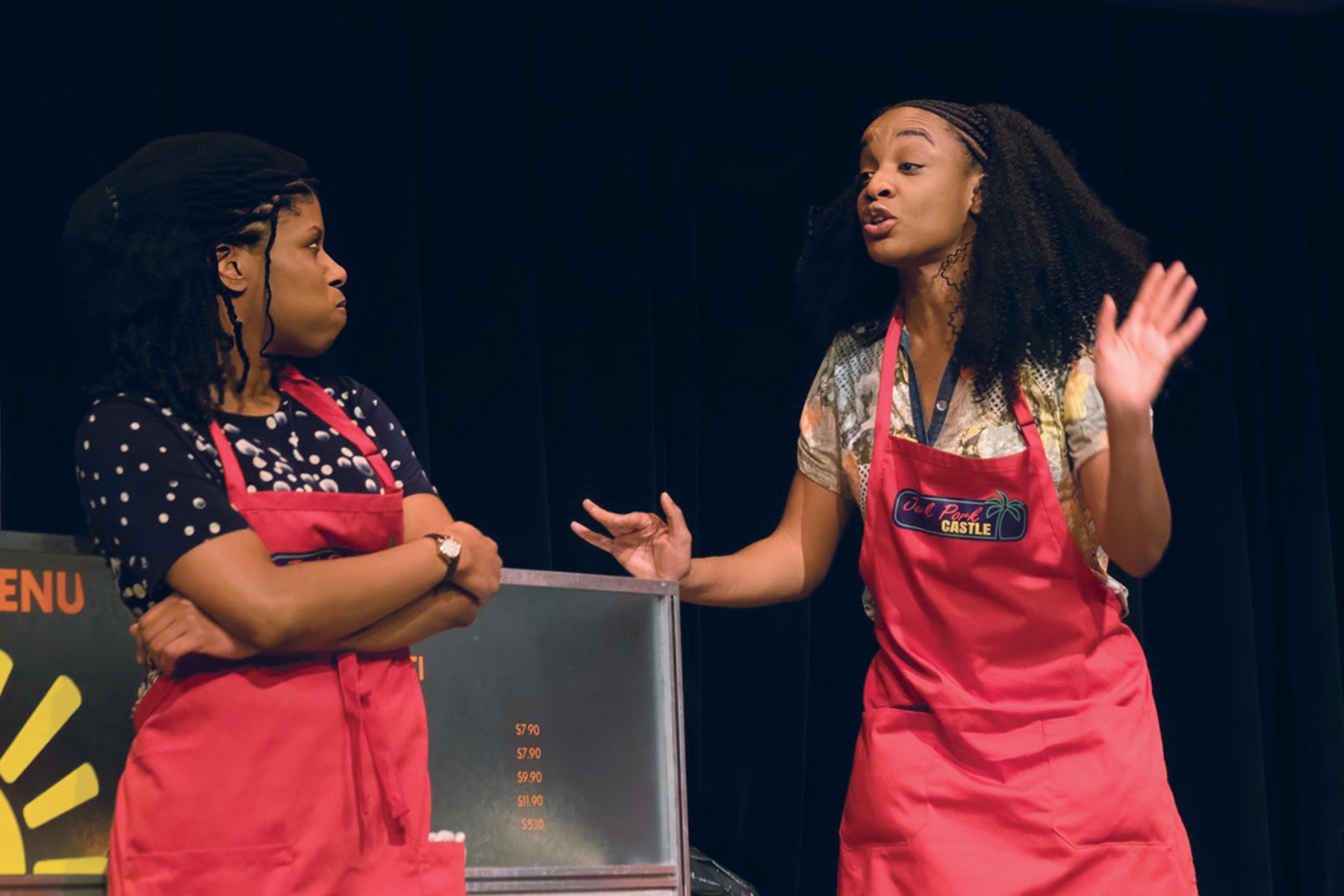
Photo courtesy of Black Theatre Workshop
On stage, Jerk Pork Castle’s neon lights shine bright, inviting. Inside, Neisha and Andrea anxiously sweep the floor, waiting for hungry customers. It’s another day of checking in on each other, of discussing their citizenship status in the country, of hoping. In our place, set in a fictionalized Caribbean restaurant in Scarborough, playwright Kanika Ambrose highlights the precarious situation undocumented migrant working women in Canada experience daily.
The play opens with Neisha and Andrea, two women navigating the familiar terror of an expiring visa, working at Jerk Pork Castle as waitresses. As they attempt to figure out their status, they do what many immigrants, especially immigrants of colour, have been pushed to do—work an “under the table” job: illegal in the eyes of the state, but often the only avenue for racialized newcomers excluded from formal employment.
For both women, marriage is framed as the most viable— if imperfect—route to securing immigration status. For Andrea (played by Lisa-Willia Volcy), a relationship with Malcolm (Kym Dominique-Ferguson) offers a glimmer of possibility until he refuses to commit. Her arrest for overstaying her permit underscores how quickly the promise of Canada collapses into criminalization.
Ambrose told Prairie Books Now that she wanted to resist moral binaries in the work. “I wanted things to be obscured. I didn’t want anyone to be right or anyone to be wrong,” Ambrose said. “There’s only situation and circumstance. Each of these people is coming from specific circumstances that have brought them to the choices that they have made.”
Dominique-Ferguson, who plays Malcolm, said his own background helped him connect to the story while still recognizing the privileges he carries.
“Me, as a born Canadian, but I grew up in Jamaica and Haiti, I kind of have a little bit of an understanding of what all the characters have been through, including Malcolm, while still having the privilege of, like, not having to hide,” Dominique-Ferguson says.
Neisha (played by Alexandra Laferrière), a single mother of two, tortured daily by their absence, sees potential stability in a straitlaced and demanding Eldrick (played by Anton May), who also once relied on marriage to secure his own status. Instead, the pathway that should offer freedom becomes yet another site of exploitation, draining her already fragile resources.
Laferrière says undocumented migrants are often unfairly blamed for systemic issues. “They’re used as a scapegoat. A lot of the time they’re in very harsh, abusive situations, and they deserve empathy.”
Other cast members also say the play ultimately calls for more kindness toward migrants. “Understand that what you see on the surface, there’s a lot going on deeper and maybe, instead of making assumptions, have some curiosity,” Dominique-Ferguson says. “We could all use a little more empathy and compassion,for immigrants and for one another.”
our place, a Black Theatre Workshop production, launched the workshop’s 55th season and ran from November 19–30, 2025, at the Segal Centre for Performing Arts in Montreal. Black Theatre Workshop is Canada’s longest running Black theatre company.