From the roots
How Juno Award–winning artist Quique Escamilla stays connected to his cultural history
Gabrielle Cole
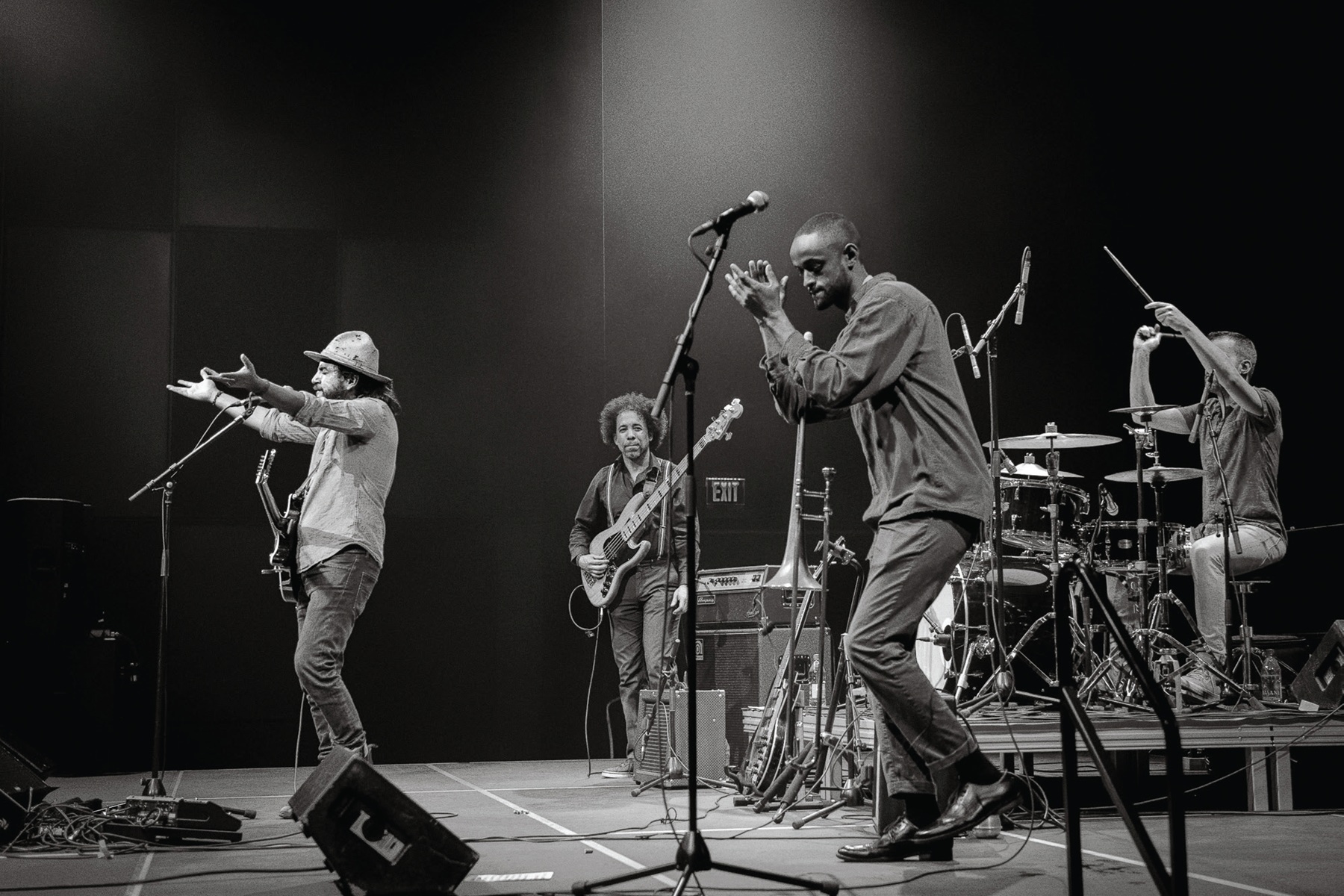
Photo by Celia Mendez
If Quique Escamilla could summarize his musical journey in one word, it would be “grateful.” Born and raised in the southern Mexican state of Chiapas, the Juno Award–winning musician grew up with a limited idea of how far music could take him. Now based in Toronto as an established and touring artist, he remains tethered to his roots and to the cultural history that fuels his practice.
At its core, Escamilla’s work is about bringing the rich tapestry and history of Indigenous sounds into a modern world. Traditional Latin American rhythms like ranchera and cumbia give Escamilla’s music a distinct edge. From his award-winning record 500 Years of Night, to his most recent album Encomienda, there is a political undercurrent to every piece of music Escamilla creates. With each new project, he hopes to draw attention to Indigenous rights, tradition, and culture.
“[I’m] raising awareness about the people and history that the books have forgotten to tell,” Escamilla says.
This is the basis of Tlalli Festival, an Indigenous music festival that Escamilla created in 2021. The idea behind the festival stems from the artist’s experience performing for Mexican migrant workers on rural farms in southern Ontario. Seeking to do the same thing on a bigger scale, Escamilla founded Tlalli—whose title translates to “Earth”—to platform Indigenous music, food, and culture at large.
The first three iterations of the festival took place on rural farm sites in Hamilton, but last year’s edition saw the festivities brought to Toronto. Escamilla knew the move would require some adjustment, but he has high hopes that Toronto is the right place to host a festival like Tlalli. His aim is for the festival to reach new audience members, and ultimately to give more people the chance to experience the festival’s unique blend of traditional foods and music curation.
Tlalli directly addresses the lack of diversity in mainstream festivals, with the most recent edition of the festival bringing in Indigenous artists from Chile, Mexico, the Dominican Republic, and more. Escamilla states: “I challenge the models of festival headlining acts. I find it so important for [these artists] to tell their story, their music.”
In addition to powerful performances, festival attendees are given the opportunity to enjoy traditional meals made by Indigenous chefs—a means of honouring the long history of farmers, like the ones Escamilla performed for all those years ago.
In planning for the future, Escamilla is looking forward to doing things at his own pace—priotizing quality over quantity when it comes to tours, festival expansion, and other projects.
“I’m not running the music industry’s race,” Escamilla says.
Escamilla is currently at work on a new album, out in 2026, and planning future iterations of Tlalli. His main objective remains the same: to continue to honour the Indigenous cultures and communities of the Americas.