Shifting focus
Why are women with ADHD and autism still an overlooked part of the Canadian neurodivergent community?
Rosemary Richings
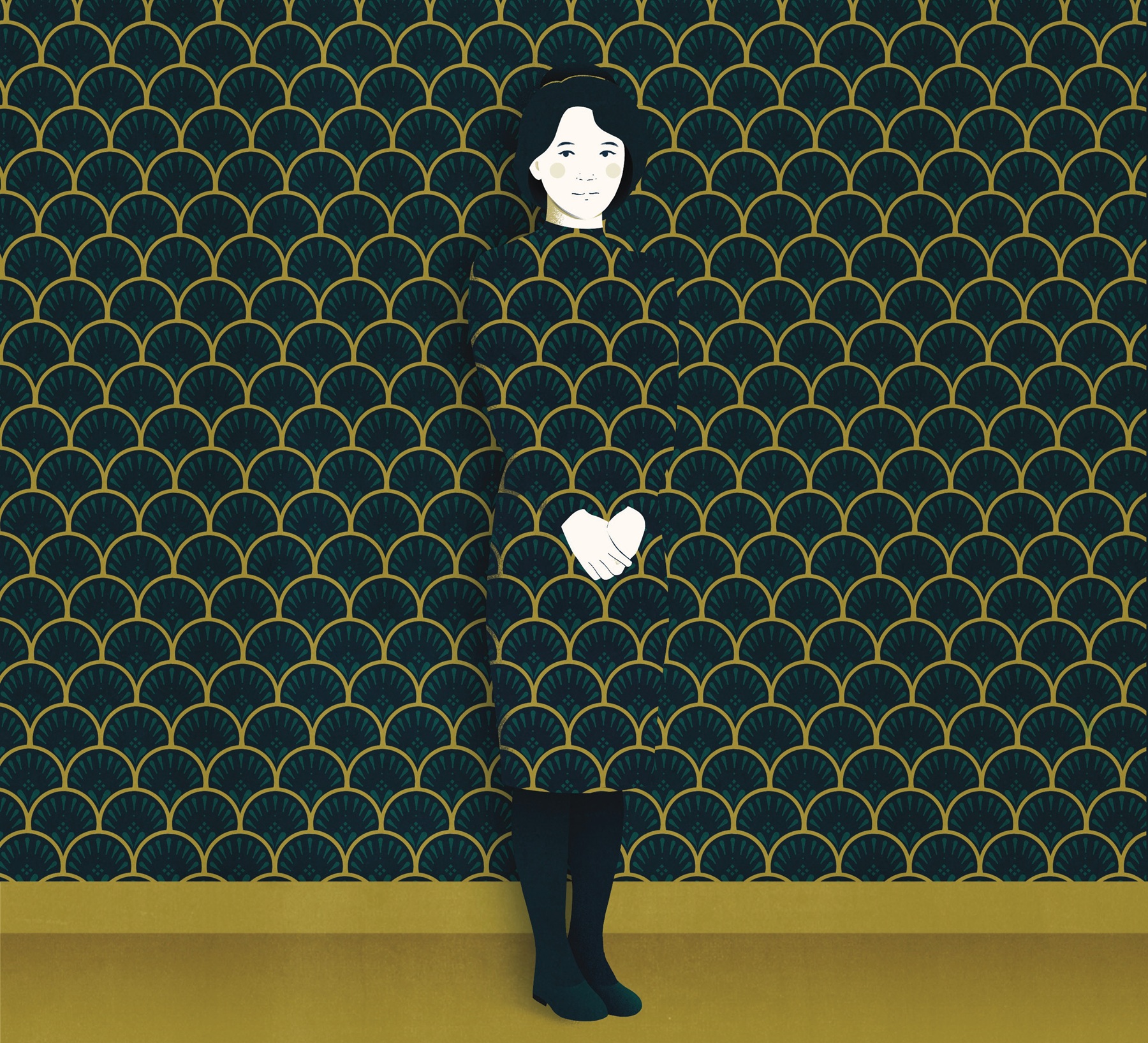
Illustration by Diana Bolton
In the foreword of Maxine Roper’s No Heels, No Problem, a survival guide for women with ADHD and dyspraxia, I describe neurodivergent womanhood as a “guessing game.” That choice of words reflects my experiences getting a diagnosis of dyspraxia: a neurodivergent condition that presents difficulties with the coordination, planning, and sequencing of movements.
When I was first diagnosed, it was the mid-’90s, and doctors told me that neurodivergent women are rare. I didn’t realize how untrue that is until I made friends with other neurodivergent women. Decades have passed since my diagnosis, and many of my friends who are autistic and have ADHD are still struggling to be believed by others. Speaking to Lara McLachlan brought this systematic barrier into perspective. McLachlan is the founder of the Neurodiversity Change Foundation, a non-profit that’s building accessible and inclusive environments for neurodivergent adults. “Women often arrive at a diagnosis after decades of masking,” she says.
Masking refers to the process of suppressing neurodivergent character traits through behavioural adjustments like forced eye contact and scripted conversations. In public settings, it’s like acting, performing neurotypical behaviour mastered through practice and mimicry. Practically speaking, masking has its benefits: survival in intolerant environments. Yet, when you never feel safe enough to take off the mask, you live years of your life without confronting who you are. The perpetual state of performance that masking requires can lead to burnout, along with an overwhelming sense of loneliness from no one ever getting to see the real you.
Since neurodivergent women are often so good at masking, their support needs are underestimated. A Centre for ADHD Awareness, Canada report said that the image that often comes to mind when people think of ADHD is the stereotype of a young boy who cannot focus or sit still in classroom settings. A much lesser-known form of ADHD is that of a bright, daydreamy young girl or 40-year-old woman who struggles to complete tasks. All the above manifestations of ADHD are valid, but the young boy is much more likely to be diagnosed. According to Kim Shah, president of the Institute of Neurodiversity Canada, “boys remain diagnosed three times more frequently than girls. On average, girls receive their diagnoses five years later than boys.”
Since autistic women are facing mutual challenges, their chances of being diagnosed with generalized anxiety disorder or depression before they’re diagnosed with autism are fairly high. Annie Kent, a woman who experienced this, told the CBC that she felt like an alien for her entire childhood. Once she reached adulthood, she had a few jobs that didn’t last long. Then she slid toward needing mental health support. A few years ago, she finally found that she’s autistic and has ADHD, otherwise known as AuDHD. For so many years, Kent’s autism and ADHD were undiagnosed because it did not occur to anyone that girls can have these diagnoses.
According to National Geographic contributor Kaelyn Lynch, in 1999, “the research community still thought of ADHD almost exclusively as a disorder for boys.” Back then, Kathleen Nadeau, a clinical psychologist, was laughed at when she said that both boys causing trouble and spending lots of time in the principal’s office and quiet girls on the honour roll can have ADHD. Now, the gender diagnosis gap is a research funding constraint problem. Nancy Doyle, a specialist in neurodiversity inclusion, told me that the effectiveness of ADHD medication varies during different stages of puberty, menopause, and menstruation. To produce accurate results on ADHD medication studies, female research subjects require evaluation during all stages of the hormonal cycle. Because hormonal cycle variations are often not a factor for male test subjects, they require less time and money to produce accurate results.
Since women are such an overlooked part of the ADHD community, their accomplishments often come with unseen negative consequences. They may stay up all night to get a job done, which leads to feeling exhausted for the rest of the week. This sort of behaviour typically happens because of difficulties with task initiation and prioritization, along with only being able to concentrate at distraction-free times of day. According to McLachlan, because women may appear competent, their support needs are underestimated. “This contributes to missed opportunities for care, all kinds of harm from institutional to interpersonal, to severe burnout.”
The average age for Canadian women to get a diagnosis is 37. As UK-based The Brain Charity pointed out, “undiagnosed women experience years of uncertainty and confusion.” For this reason, the diagnosis itself is a pathway to healing from years of being misunderstood. A core part of the healing process is receiving the right forms of support, which make it possible for women to go from treading water to thriving.
Although neurodivergent people are not a monolith, the availability of multiple approaches to communication and working can make a difference. Distraction-free surroundings and instructions conveyed through written reminders can help people perform tasks to the best of their ability. To foster the innovative thinking that the neurodivergent community is known for, taking breaks to retreat to quieter spaces must be socially acceptable. True equality, however, demands a greater range of diagnosis options.
According to Shah, “Publicly funded autism assessments involve 2.5-plus year waits, while private assessments cost $2,000-$5,500.” Choosing between lengthy waits for public care and expensive private care means limited options for self-employed, part-time, and temporary workers who don’t have health insurance that covers the costs of private care. Solving the neurodivergent care gap is about coming up with solutions that acknowledge that it’s both a class issue and a gender issue.
Once the class and gender barrier is shattered, neurodivergent women can persevere, even when facing widespread misinformation about neurodivergence. Misinformation spreads stigma, which is especially harmful when those holding stigmatizing views have the power to control the quality of neurodivergent people’s work and school environments. But if neurodivergent people are insufficiently supported, they will never be able to escape environments that are harmful for their well-being, leading to a poorer than necessary quality of life.