Bury your gay girls
Why are online comments for Bridgerton’s upcoming sapphic season filled with lesbophobia?
Ashely Crouch
Joshua Miranda / Pexels
This past January, lesbians and queer women flocked to the Montreal queer bar Champs to watch a Heated Rivalry marathon. Despite my lack of interest in men (and my lack of being a man), I was one of many lesbians who found joyful solidarity in the queer male romance featured on screen. Wrestling with homophobia, stolen kisses in hidden spaces, and the grin-inducing flirtatiousness of those early texts that you keep hidden from prying eyes were different yet the same.
I knew, however, that there was a huge demographic of straight women watching Heated Rivalry. Their thirsty comments under Crave’s Heated Rivalry Instagram posts made it clear why Rachel Reid’s adapted gay hockey romance series went viral: “I am a middle aged straight woman and am obsessed with this wonderful show,” “[I]lya is such a puppy dog for Shane I can’t bear it,” and “Hollander and Rozanov have redefined love stories for me!!!!! and i’m a straight girl and going crazy over these two!! what is wrong with meeeeeee?????”
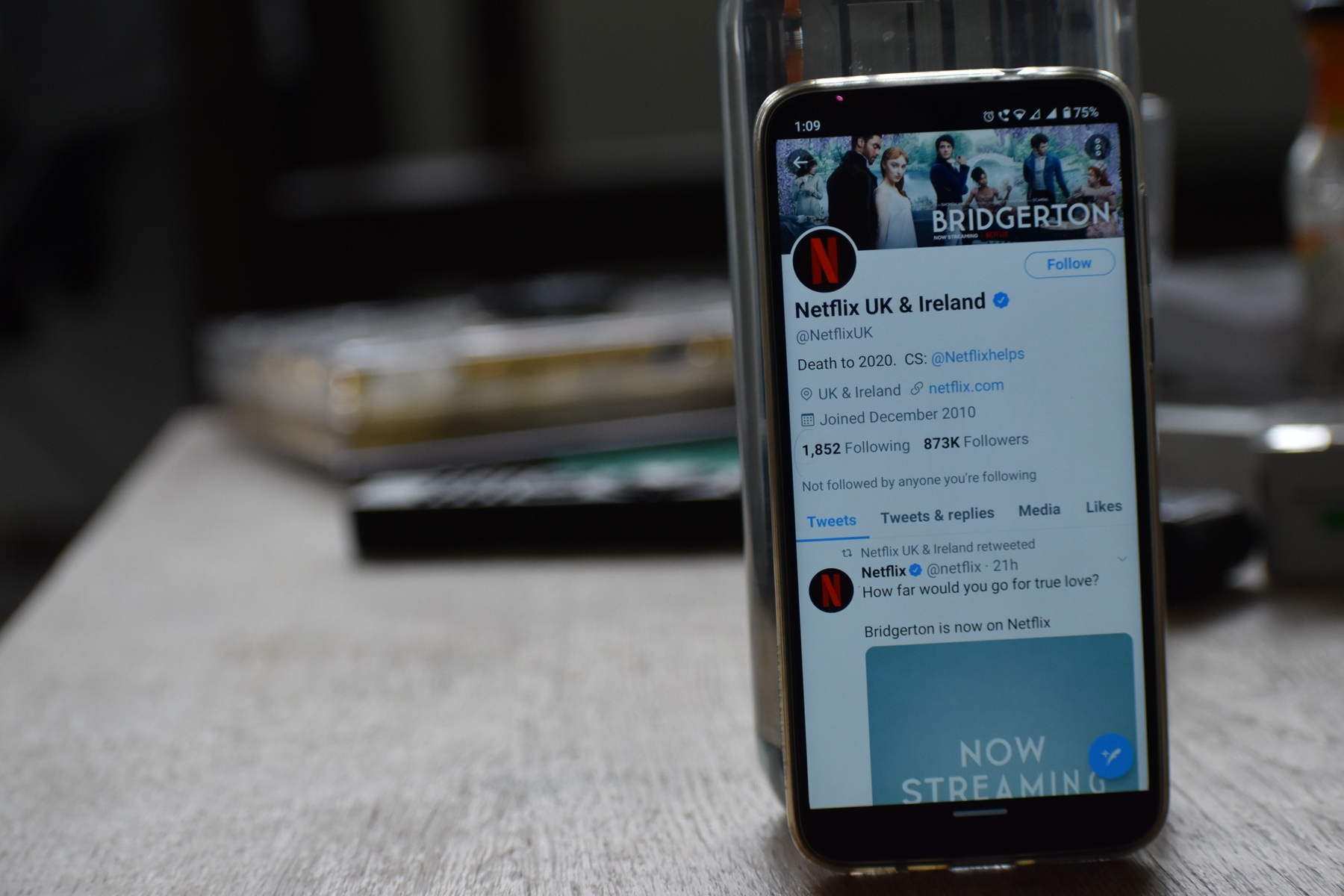
Encouraged to see such allyship, I flocked to Instagram after Netflix announced that their popular regency romance series Bridgerton would centre a lesbian love story. Should I have been surprised by the response? “I wish there was a dislike button,” “it’s a no for me,” “zero chemistry, sorry,” and the most hurtful, “Love how we all agree this is going to be the worst season and we all are gonna hard pass it . . . Unless they turn Michaela in[to] Michael.”
How could the same straight women championing a gay storyline turn so viciously on a lesbian one?
*
Many women’s comments on social media framed their outrage at Bridgerton over historical accuracy or book adaptation accuracy. Yet, other fans of the series are quick to point out that previous seasons featured major changes from the book, including interracial marriages, a Black Queen of England, and major plot changes to the love stories. Beneath it, there is a subconscious element of misogyny that lingers in straight women’s discourse over these two shows.
The misogynistic principle with Bridgerton’s new season is that women’s stories are only given value if they relate to men, whether as a love interest, object of desire, or an emotional anchor. Feminist scholar Jen Izaakson writes, “Lesbians represent a ‘no’ to men that is unfathomable at best, and violently hated at worst.” In a misogynistic society, women often subconsciously internalize men’s sentiments, leading to lesbophobia. In a piece for Her Campus, writer Leann Ochs expands on Izaakson’s understanding, saying that straight women are not necessarily rejecting queerness itself but rather stories in which women exist outside of male desire. She adds that men have been centred in romance to the point that women cannot imagine romance existing without them. I reread the comment section, holding this understanding as I tried to make sense of women’s complaints.
I take the hostility toward Bridgerton’s lack of male presence in the upcoming season as a direct result of lesbophobia prevailing within a misogynistic society. Women have internalized the patriarchal framework, which fuels a multilayered discomfort with sapphic romance. Research in social psychology also shows that heterosexual women report less comfort with lesbians than with gay men. That research merely validates what I (and many other lesbians) knew in high school: my female classmates latched onto a male “gay BFF” and avoided out-and-proud lesbians like the plague.
In a Substack post, lesbian writer and content creator Leanne Woodfull ruminated on Bridgerton’s announcement: “a lot of straight women don’t actually care about the queer community, they care about a very specific, palatable version of it. That kind of selective allyship is rooted in lesbophobia and misogyny, internalised or otherwise.”
Television certainly mirrors our sentiments. According to GLAAD’s 2023/24 report, “only 8.6 percent of characters on primetime scripted broadcast TV were LGBTQ+, and just 24 percent of those were lesbian.” To add to that statistic, there is also an epidemic infecting television production: the majority of shows that feature lesbian leads end up cancelled. In 2020, Netflix cancelled four new original series featuring lesbian leads, including Atypical, I Am Not Okay With This, The Society, and Teenage Bounty Hunters. Netflix claimed these shows were cancelled due to “COVID-19-related circumstances,” but other series with male queer representation continued. The 2022 lesbian vampire series First Kill was cancelled despite receiving over 100 million hours of view time in the first month of release and sitting in Netflix’s top 10 for several weeks.
I wondered if Bridgerton would have been cancelled if season one had featured a lesbian main storyline.
But while lesbian stories get cancelled, gay male stories are fetishized. According to sex therapist Casey Tanner, straight women are drawn to Heated Rivalry for the same reasons they’re drawn to romance novels. The show offers two emotionally intense “book boyfriends” while also subverting a setting historically drenched in toxic masculinity.
My gay male friends who have seen the show joked that Shane and Ilya’s characters are actually lesbians. The way that the characters yearn for each other—the way they communicate, the flirty texts and masculine vulnerability that unfolds—really gives the sense that these characters were written by a woman and for women. Heated Rivalry provides the emotional intimacy and vulnerability that many straight women complain their relationships lack.
The same women who love Heated Rivalry but are criticizing Bridgerton’s new season claim that they cannot see themselves in a lesbian story. But neither are they queer men. So is it even allyship to champion these two men, or is it more about serving straight women’s fantasies?
*
People asked me why I enjoyed Heated Rivalry as a lesbian. My friend Sam, also a lesbian, said it well: “Even though it’s not about lesbians, I think most queer people can relate to being closeted and having to hide a relationship, the repercussions of if people found out. Other than that, I think it’s just a cute love story. I can enjoy a story even if I’m not represented in or attracted to the characters.”
What’s not to love about a cute love story? Sadly, there is a long history of queer love stories that never got a happy ending; this dates back decades, when authors and showrunners would write storylines only to kill off at least one of the characters to avoid backlash. From 1934 to 1968, the American Motion Picture Production Code (popularly known as the Hays Code) dictated what was deemed appropriate to show on television. Storylines with happy endings for LGBTQ+ characters were clearly not up to code, since they were deemed sexual perverts. This trope is famously known as “bury your gays.” While the cultural attitude has shifted some, we still see this trope play out often in lesbian media; if sapphic shows don’t get cancelled, they are likely to end in tragedy, like in Killing Eve, The 100, The Last of Us, Yellowjackets—the list goes on.
If you look at the roster of upcoming sapphic films in 2026, you will see mostly psychological thrillers and horror. Mother Mary, featuring a psychologically fragile Anne Hathaway as a queer pop icon, promises to descend into tragedy. Teenage Sex and Death at Camp Miasma is a sapphic horror film filled with psychosexual chaos. Lesbians may be having their moment in theatres, but for a horror-avoiding wimp like me, it just continues to paint sapphic love as inherently negative. Where are our cute lesbian love stories?
My excitement for Bridgerton’s upcoming sapphic season is not just for a dominant lesbian love story, but one almost guaranteed to end in joy. Francesca and Michaela will offer one of the few film and television opportunities for lesbians to be seen, their desires to be celebrated, and their love to be portrayed as something genuine, pure, and capable of lasting. So please, straight female Bridgerton fans, in a world of “bury your gays,” let us just have this one.