Pride in practice
In Saint John, Chroma fills in gaps in queer community care
Alisha Mughal
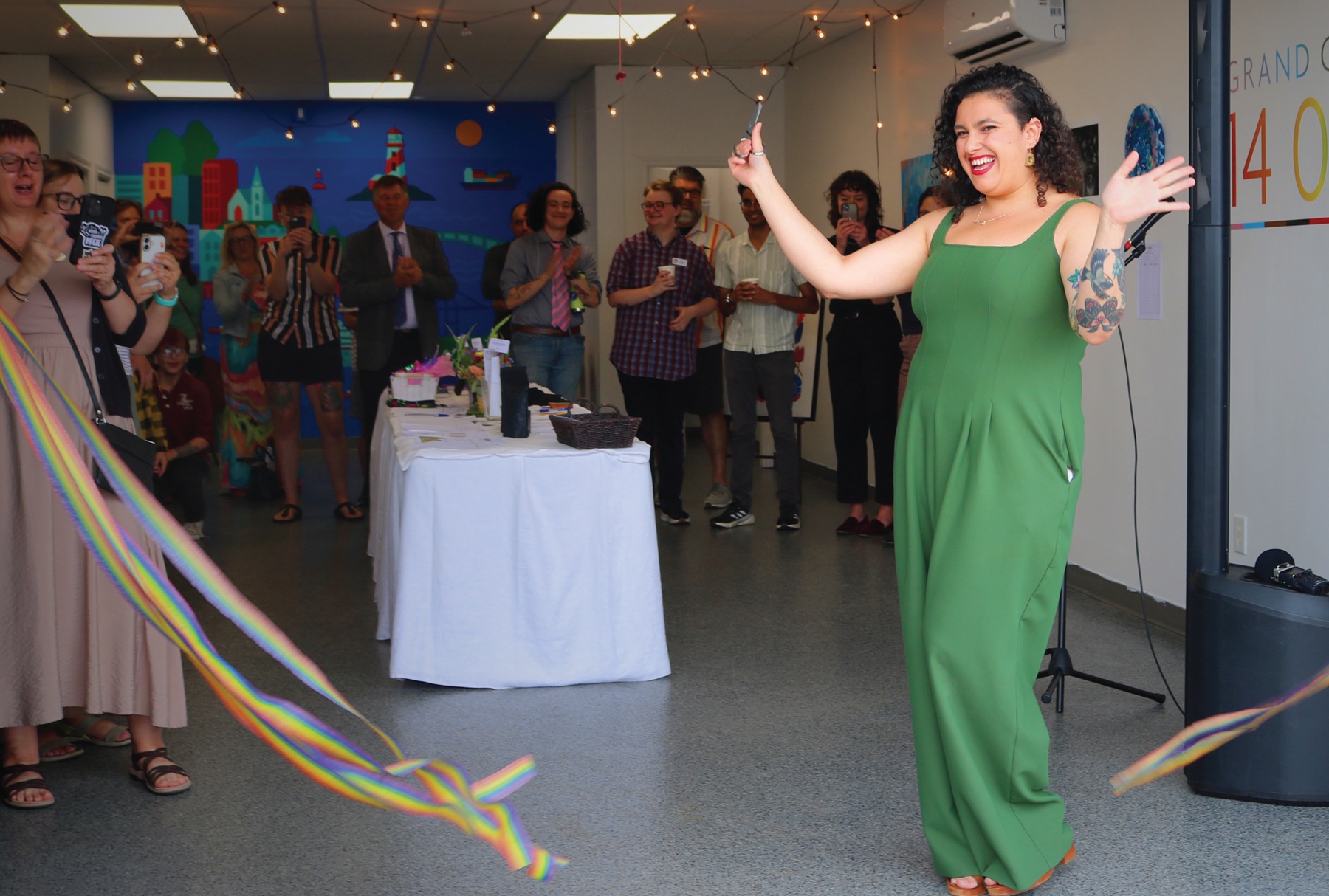
Photo by Hadeel Ibrahim
Hadeel Ibrahim was a reporter for the CBC in Saint John, New Brunswick in 2023 when then-Premier Blaine Higgs made headlines. He’d removed protections for trans and gender-diverse students, a move that prompted Ibrahim to eventually switch careers.
Higgs’ government revised Policy 713, an education policy effected in 2020 that established a baseline of safety, respect and inclusivity to guide schools in working with 2SLGBTQIA+ students. Higgs introduced a parental consent requirement for students under 16 to use new names or pronouns at school, effectively requiring trans and gender-diverse students to come out to their parents first. He saw the move as preventing kids from keeping information from parents, but many—Ibrahim, a queer person, included—saw it as endangering young people.
“It was the first time in Canada that this kind of [conversation around] parental rights versus rights of transgender children was being had,” says Ibrahim, who reported on the issue until November 2024, just after Higgs and his Progressive Conservative government were unseated.
Chroma, one of the only organizations working for and representing the 2SLGBTQIA+ community in the province, joined a lawsuit against Higgs’ policy changes. Filed in September 2023 and led by the Canadian Civil Liberties Association, the action alleged the revised policy imposed discriminatory rules on trans and gender-diverse kids, violating the Charter of Rights and Freedoms and provincial Human Rights and Education Acts. The case was withdrawn when the new provincial government reversed the changes in December 2024. In March 2025, Ibrahim became Chroma’s executive director.
“I saw a lot of overlap between journalism and community service,” says Ibrahim, who had been following Chroma’s work within Saint John’s small queer community since its incorporation in 2020. The work Chroma does is as multifaceted as the community it works for, but it boils down to education, systems navigation, and community connection.
Systems navigation looks like assisting people as they move through their name change, or as they select the healthy and correct binder for their body from the organization’s binder library.
A supper club helps build community connection, a crucial form of support because sometimes people don’t know what help is available. But when they feel connected, Ibrahim explains, they are more comfortable asking.
Education takes the form of allyship workshops for universities, government and gender and sexuality alliances at schools. Chroma also works with health-care providers, teachers, the Alzheimer Society of New Brunswick and others providing social services, introducing the acronym, explaining pronouns and “providing that queer perspective to many different industries.”
“It makes a big difference for people who have never been exposed to a queer person or haven’t considered the needs of queer people to sit down and listen to a queer person from their community talk about what it’s like, the challenges and how to be respectful,” Ibrahim says.
For Ibrahim, it’s important to give people space to ask questions they fear are silly, so they can develop the language and tools they need without placing the burden of teaching on the queer people in their lives. This ultimately builds a stronger and greater sense of community because “we’re calling in people who have never felt comfortable or never understood [queer] issues and giving them the opportunity to be part of the support system for queer people.”
The work that Chroma does in New Brunswick’s queer community isn’t novel so much as it is formalized. Queer people have always come together to support one another, Ibrahim notes, and Pride organizations have long existed in New Brunswick. The reason that Chroma is one of the only organizations of its kind is a matter of institutional support and government funding.
Ibrahim is looking forward to expanding the support Chroma offers to its growing community, including continuing its work with the New Brunswick Multicultural Council in providing training to workers helping newcomers settle into Canada.
“It feels essential to be part of building and maintaining this community for queer people because it’s not just a matter of having friends,” she says. “It’s a matter of having a support network when things are challenging, when you’re being targeted by different governments, when your existence is denied and when services are denied to you.”