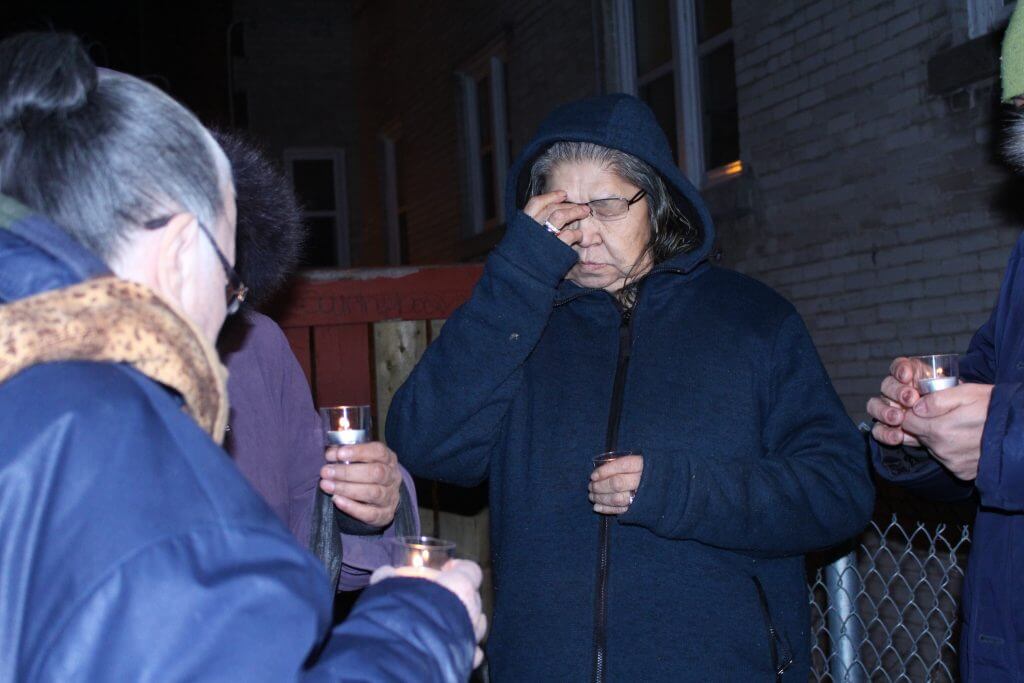
Eleanor Sinclair at her daughter Windy’s vigil. Photo courtesy of Ryan Thorpe
It was freezing in Winnipeg, cold enough that frostbite threatened to set in minutes; the kind of cold that sets deep in the bones, down to the marrow. Unforgiving wind ripped through flat, icy streets, and snowdrifts piled along sidewalks. A frigid, stainless steel sky descended on the prairie capital.
By the time Windy Sinclair, a young Indigenous mother, went missing Christmas night in 2017, an unrelenting cold snap was stretching into its second week. In the days after she disappeared, her family phoned police, hospitals, remand centres, and downtown hotels and bars, asking whoever picked up if she was there. They monitored her social media accounts for signs of life. They loaded into an old van, maneuvering through the city’s sleet-covered streets, in search of her. Her children wondered when she was coming home. Her mother prayed.
Then, four days after the disappearance, came the knock at the door. Windy’s crumpled body had been found in a dirty, inner-city back alley, so frozen it took police two days and two space heaters to unthaw it enough to move.
Six weeks later, Eleanor Sinclair stood and stared at the spot her daughter was found frozen and dead. Her shoulders slumped forward and shook as she sobbed. Her head hung low as if in prayer. As tears crested her cheekbones, she whispered something to herself—or maybe to her daughter’s spirit. On that day, Windy would have turned 30. In her memory, Eleanor organized a vigil. Nine people showed up. One of them, a small child held in her mother’s arms, wanted to leave as soon as they’d arrived; it was still incredibly cold out. The group huddled in the back lane, bracing themselves against the elements.
It wasn’t as cold that day for the mourners as it had been when Windy arrived. The last week of her life was one long severe weather warning. It remains unclear how Windy ended up at the spot she was found. What is known, however, is that the chain of events leading to the discovery of her body was remarkably tragic, yet entirely commonplace.
Windy’s death marked one more soul snatched away from the streets of Winnipeg, a city with a long history of Indigenous murders and deaths that sits like an open scar on the community’s heart. Had Windy’s body not been found, it’s likely her death would have passed like those of so many Indigenous women: unreported and ignored.
***
On December 25, 2017, as the Sinclair family prepared to sit down to a traditional Christmas supper of turkey, mashed potatoes, biscuits, and gravy, paramedics were dispatched to their North End home. The area has long been Winnipeg’s most socially disadvantaged and deprived, pocked by high levels of addiction, crime, and gang membership, and low levels of employment and median income. Bordered on the south by a rail yard, the North End is cleaved off from the rest of the city. Community activists say the yard serves as both a physical and psychological barrier between the haves and have-nots; one local playwright described it as Winnipeg’s Berlin Wall.
That night, Windy was intoxicated, hallucinating, and paranoid, convinced a man was coming to kidnap her and her daughter. Eleanor had been concerned with her behaviour all afternoon after she’d caught her mumbling to inanimate objects in their home. “I knew right away she wasn’t herself,” she remembers.
At 11:15 p.m., a nurse went to check on Windy and tell her she was expecting a child. But she was nowhere to be found
The erratic behaviour kept escalating. Eventually, Windy picked up the phone and dialled 911, telling the operator someone was coming to steal her children. Eleanor grabbed the phone and explained what was really going on: Her daughter was high and confused, and while she worried for her well-being, she thought the safest place for her was at home. After hanging up, Eleanor tried to calm her daughter down. It didn’t work. Windy dialled 911 again. Once more Eleanor took the phone from her. In doing so, she accidentally hung up. Two calls in one night with a disconnection meant the operator had no choice; someone had to be dispatched.
Minutes later, an ambulance pulled up to the home. Paramedics checked Windy’s vitals and asked her some questions. In an incident report, one wrote that during the conversation Windy stood up abruptly, walked to the kitchen sink, and turned on the tap. Then she walked back and sat down, leaving the water running. The paramedics asked what drugs she did and Windy told them she injected methamphetamine, explaining sometimes she mixed it with opioids like fentanyl or morphine. Under the portion of the incident report labeled “Primary Impression,” a paramedic wrote: Poisoning/OD.
The paramedics told Eleanor that Windy needed to be transferred to Seven Oaks General Hospital for observation and testing. That forced Eleanor to make a decision. Two of Windy’s children—Travis, then 11, and Samarrah, then five, both of whom Eleanor has custody of—were at her home. The children had been in Eleanor’s care throughout the entirety of Windy’s battle with addiction, which began after her father died in 2015. (Windy also had two other children—Aaron, eight, and Harvey, five—who were not at the home that night. Aaron lives with his father, while Harvey is in foster care.) Eleanor knew she couldn’t leave the children at home. She also didn’t want to take them to the emergency room on Christmas. She decided she and the children would stay home and check on Windy the next day. She explained to the paramedics that should anything come up, hospital staff would have to call her at their family home, not the out-of-date number listed on Windy’s medical file. The paramedics wrote down the correct emergency contact number and promised to pass it along to staff when they arrived at Seven Oaks. As her daughter was led out the door, Eleanor pushed a winter coat into her arms. The temperature outside was nearing -30 C; she hoped it would keep her warm.
Hospital records show Windy was signed into the care of Seven Oaks emergency room staff at 8:06 p.m. Ten minutes later she was seen by a triage nurse, who noted in Windy’s file she was an intravenous meth user behaving erratically. Staff then led Windy to a nearby room, located close to a nursing station where she could be observed, to wait for a doctor. Once again it was noted in her file that she was behaving strange: Her speech was slurred and she told staff she wanted to leave. For still-unknown reasons, the decision was made to move her to a different room, tucked away at the back of the hospital wing, far from the watchful eyes of the nursing station.
At 8:48 p.m. Windy was seen by a doctor, who ordered an IV sedative and a pregnancy test, the latter standard procedure for women of child-bearing age when they come to an emergency room. The results would later show Windy was two months pregnant; there’s no evidence to suggest she knew. At 11:15 p.m. a nurse went to check on her and tell her she was expecting a child. But Windy was nowhere to be seen. Windy had pulled out her IV, gathered her belongings, wandered down the hall, and walked out the hospital’s east exit. Security footage shows her stumbling out the door, her jacket undone as she ventured outside.
When hospital staff realized she was missing, they pulled up Windy’s medical file and called the out-of-date emergency contact number listed. No one picked up. Either the paramedics did not pass along the correct phone number, or staff didn’t bother to call it. Windy’s family was not told she was missing, and no further efforts were made to contact them.
Three days later, on the morning of December 28, a woman looked out her apartment window in the city’s West Broadway neighbourhood, roughly 10 kilometres south of Seven Oaks. She saw something in her back lane, but convinced herself it was a pile of clothes. Minutes later, second guessing her eyes, she walked out back to check. It was Windy’s body, tucked away out of sight in a back alley by a heating vent.
***
There are many holes in the story of Windy’s disappearance. It’s unclear why she was moved from a room where she could be closely observed to one at the back of the hospital wing. It’s unclear why no one checked on her for so long after she was given a sedative. It’s unclear why she was left alone while exhibiting signs consistent with drug-induced psychosis and expressing a desire to leave. It’s unclear why she wasn’t held under the Mental Health Act, which allows people to be detained for their own safety. It remains unclear whether or not a “Code Yellow”—a hospital procedure used, among other reasons, to search for patients who leave against medical advice—was called after staff realized she was missing. It’s unclear why Windy’s family wasn’t notified she had disappeared. It’s unclear why Eleanor was told, when calling the next morning to ask about her daughter, that she’d completed treatment and was discharged. So much about what happened, and did not happen, remains unclear. And that, Eleanor says, is because her daughter was Indigenous in a hospital in Winnipeg.
Winnipeg: The city once dubbed Canada’s most racist by Maclean’s magazine. The city of J.J. Harper, Brian Sinclair, Claudette Osborne, Matthew Dumas, Errol Greene, Tina Fontaine, and countless others whose deaths and disappearances went unreported and whose names no one will ever know. Eleanor recognizes her daughter made poor choices that helped lead her to the alley where her body was found. She also believes her daughter was failed by Seven Oaks. That she still had time to turn her life around. That her death was preventable. Eleanor says the fact her daughter’s skin was brown altered what did and did not happen the night she went missing.
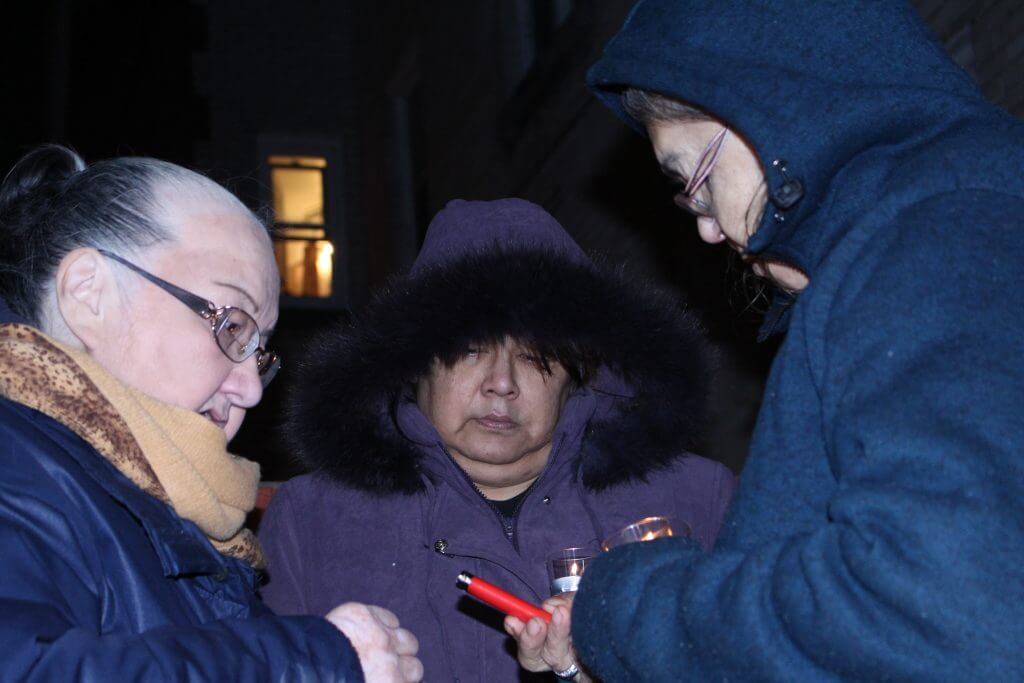
The details of Windy’s death kicked off a minor media stir, with the city’s major news outlets all chasing the story, and Canadian Press copy picked up by national publications. (The writer of this piece was among reporters covering the story.) But news cycles are quick and collective memory short. Six weeks after her body was found, only one publication sent a reporter to Windy’s vigil. The city’s meth epidemic had already offered up new casualties. In August 2017, a police spokesman told reporters Winnipeg was in the grips of a serious meth problem. Months later, the chief of police said at a press conference that the situation was so bad it was starting to keep him up at night. By all accounts meth is easily available and readily consumed on the streets of Winnipeg, which has corresponded with an uptick in violent and property crimes carried out by those desperate to fund their next hit. A local harm-reduction program estimated it gave out 1.5 million clean syringes over the past year. During a six month period that year, the Bear Clan Patrol, an Indigenous-led crime prevention group based out of the North End, said it picked up 3,000 used needles off the street.
At the vigil, Eleanor lit a candle and whispered a prayer for her daughter. Meanwhile, a few kilometres away, hundreds came together in the city’s downtown at The Forks, the historic meeting place of the region’s Indigenous peoples. They gathered in opposition to the verdict in the Gerald Stanley second-degree murder trial. Colten Boushie, a 22-year-old Cree man, was shot in the back of the head at point blank range in August 2016. After deliberation, an all-white jury acquitted Stanley, the Saskatchewan farmer who pulled the trigger, sparking nationwide protests and outrage.
With so much death and pain it can be hard to keep track of all the vigils. In front of flashing cameras and reporters scribbling in notebooks, demonstrators expressed frustration and anger at what many call the systemic racism of the Canadian justice system. Addressing the crowd, then-Manitoba Keewatinowi Okimakanak Grand Chief Sheila North declared that 150 years of Canadian history weighed on Stanley’s finger as he pulled the trigger. “It wasn’t just an accident. There were years of history that went behind that gunshot that took that life,” North said.
As the words fell from North’s lips, Eleanor wept, standing over the spot her daughter’s body had been found, lamenting what she believes is the institutional racism of the Canadian health care system. The sense Windy’s death had already been forgotten was palpable. It was exactly what Eleanor feared most: Her daughter had become a statistic. “She’s just one more dead Native woman,” Eleanor says.
Twelve days later, the jury in another high-profile murder trial ended deliberations. Raymond Cormier stood accused of murdering 15-year-old Tina Fontaine, whose body was pulled from Winnipeg’s Red River in 2014, wrapped in a duvet and weighed down with rocks. Her death was a catalyst for the creation of Canada’s National Inquiry into Missing and Murdered Indigenous Women and Girls. The hope of “Justice for Tina,” the rallying cry shouted at protests in her honour, was in many ways the stand-in for the overdue justice that had eluded too many for too long. The verdict: not guilty.
***
After her daughter’s death, Eleanor had a series of meetings with staff and administration from Seven Oaks General Hospital and the Winnipeg Regional Health Authority, the city’s governing body for health care regulation. She was looking for answers, but says she came out with more questions. (The Winnipeg Regional Health Authority declined comment for this story, saying it couldn’t speak publicly about the case due to patient privacy concerns.) When interviewed in June, Eleanor said she still had not learned whether or not hospital staff called a “Code Yellow” when Windy disappeared, which could have protected her that night. She also says a doctor who attended one of the meetings told her Windy had been “lucid” enough to leave on her own the night she went missing.
“She was hallucinating. She was clearly under the influence. They had given her a [sedative]. But she’s lucid enough to leave?” Eleanor says. “They didn’t even look for her. Her life didn’t matter to them. I even told them, ‘If it was that cold outside, you would bring in your pet. You’d have that compassion for your pet. Why didn’t you show my daughter that compassion?’”
Shortly after a local news outlet reported the discovery of Windy’s body, the Winnipeg Police Service, in one of its only public statements on the case, said it did not consider her death suspicious and would have no further updates for media. How and when she got to that back alley is still a mystery. Manitoba’s chief medical examiner has not yet provided an official cause of death.
A 2015 report says anti-Indigenous racism is so common in the nation’s health care system that “people strategize around anticipated racism before visiting the emergency department or, in some cases, avoid care altogether”
Eleanor will likely never get the answers she’s after. On one point, however, she has no doubt: Had the hospital done what it was supposed to, Windy wouldn’t have ended up in that alley. In her view, the hospital failed in its duty of care. And that, she says, is symptomatic of the systemic racism simmering below the surface in Winnipeg hospitals.
A few months after her daughter’s death, while the meetings with hospital representatives were still ongoing, Eleanor sat at her kitchen table reminiscing about her late husband, and Windy’s father, Brian. He had been chronically ill prior to his death, so the two of them often went to Winnipeg’s Health Sciences Centre, the closest hospital to their home. “The first thing the nurse would say to him when we walked in was, ‘Okay Brian, what kind of drugs do you want now?’” she says. “It’s not, ‘Hey Brian, why did you come to the hospital? What symptoms do you have?’ That’s the attitude. That’s the kind of treatment he would get.” The racism her husband experienced at Winnipeg hospitals made him increasingly unlikely to seek out medical treatment late in life to avoid the humiliation he felt being stereotyped as the drug-seeking “drunk Indian.”
Research on anti-Indigenous bias in Canadian health care shows Eleanor’s husband wasn’t alone in feeling this way. Citing a string of academic studies, a 2015 report published by the Wellesley Institute, a Toronto-based non-profit think tank, says anti-Indigenous racism is so common in the nation’s health care system that “people strategize around anticipated racism before visiting the emergency department or, in some cases, avoid care altogether.”
A 2011 study cited in the report took a closer look at the experiences of Indigenous and non-Indigenous people accessing care at an inner-city emergency department. The researchers found Indigenous participants believed being identified as “Aboriginal and poor” may negatively affect their credibility in the eyes of health care professionals and hinder their ability to get help.
Refusing to go to the hospital, Eleanor’s husband died of pneumonia at home in December 2015. His death served as the spark for his daughter’s struggle with addiction, which would later lead her into the emergency room of Seven Oaks. Two years to the day of Brian’s death, police arrived at Eleanor’s home, telling her Windy was dead.
Dr. Shannon McDonald, the Deputy Chief Medical Officer for British Columbia’s First Nations Health Authority, who called Winnipeg home most of her life, says it’s nearly impossible to say for certain whether anti-Indigenous racism was at play in how Windy was treated at Seven Oaks. “I suppose we can say it’s possible [racism was a factor]. Knowing some of the previous circumstances in Winnipeg that have been well reported, it may even be probable,” McDonald says. These previous incidents include, among others, the death of Brian Sinclair (who shares the same name as Eleanor’s deceased husband, but is not related). Sinclair, a 45-year-old double amputee confined to a wheelchair, came to Winnipeg’s Health Sciences Centre seeking help for a blocked catheter in September 2008. A subsequent inquest into his death determined he was ignored for 34 hours while waiting in the emergency room, with staff later admitting they assumed he was drunk, homeless, or both. He died of a treatable bladder infection in Manitoba’s largest hospital. By the time anyone noticed he was dead, rigor mortis had set in and an official time of death couldn’t be determined.
The Brian Sinclair Working Group, a collection of doctors and academics who conducted an investigation into Sinclair’s death, released a report with a series of recommendations in September 2017. That month, in response to the report, the interim president of the Winnipeg Regional Health Authority said it was time to “come to terms” with the way “systemic racism” can affect health care services. Three months later Windy walked into the emergency room at Seven Oaks.
“This young woman coming in, intoxicated, incoherent, she would have been considered troublesome,” McDonald says. “This young woman would have confirmed for some people their image of a drug-using Indigenous person, who may not have been considered as valuable as other patients. I’ve worked in situations where that’s the case, where people that I’ve worked with professionally sometimes see some patients as more worthy of their efforts than others.”
***
Eleanor has still been fighting to learn more about what happened that night. She’s also trying to get Seven Oaks to acknowledge the ways she says hospital staff let her daughter down. Both of those battles, Eleanor says, have so far been in vain. “Her life should matter to them. Her life did matter,” Eleanor says. “But I am going to make sure that changes are made. And if I have to go protest outside the Seven Oaks then I will do that. I can’t let them get away with this one. She mattered. She mattered to a lot of people.”
At the same time, Eleanor has been raising two of Windy’s children, Travis and Samarrah. She dreads the day Samarrah starts asking hard questions about what happened to her mother. She doesn’t yet understand it, and can’t wrap her head around the fact her mom is really gone. “She’s going to ask me what I did about it,” Eleanor says. “So I need to be able to say I made them accountable. That I did anything that I could to try and make her life meaningful. To make sure that nobody else goes through this.”
Sitting in her home, the last place she saw her daughter alive, Eleanor broke down and cried, recounting the time, not long after Windy died, when she took her granddaughter on a trip outside the city.
“I had to drop my Mom and Dad off out of town. I took her with me. On the way back she said, ‘I can see the stars.’ Because she hasn’t been out of the city in the longest time. I said, ‘Yeah baby, there’s a lot of stars out there.’ So we stopped and got out and looked, and she said, ‘I miss my Mommy.’ And I said, ‘Yeah baby, I miss her, too.’”
Eleanor’s voice began to quiver and shake. She tried to compose herself, holding it all in to finish the story. But the dam had cracked behind the weight of the pain. Then, it burst open. She lost control, the words barely audible through her sobs.
“I said, ‘Look for the biggest star baby, that’s probably your Mom.’ So she’s walking around the van trying to find the biggest star. Then she finally finds it and she goes, ‘That’s my Mommy. That’s my Mommy shining brightly.’ And I said, ‘Yeah baby, that’s her.’”
That night, Eleanor made up imaginary errands the two of them needed to run. Her granddaughter didn’t want to lose sight of the star, and Eleanor didn’t have the heart to spoil it for her. They just kept driving, staying out until the clock on the van’s dashboard read 3 a.m. Eventually, she pulled back into the city, winding through the residential streets of the North End, before parking outside their home. Then she carried her granddaughter inside and tucked her into bed, as her mother had once, long ago, in better times.
“Now once in a while she goes out into the backyard and tries to find that star,” Eleanor says, with tears in her eyes. “But here in the city, you can barely see the stars.”
]]>This Hisses will be performing at NXNE at The Rochester (423 College Street) on Saturday, June 16th at 8pm. Listen to Gold on Fire here.
]]>
Mijok Lang may not know how old he is, but he has no doubt where he comes from. He remembers, as a child, singing a familiar tribal song with friends. It was the only way, he says, that they could keep lions and other animals at bay in the jungles of Sudan and Ethiopia as they ran from would-be killers.
Mijok, now more widely known by his hip hop pseudonym Hot Dogg, is one of more than 30,000 refugee children known as the “Lost Boys,” who were victims of a civil war that overtook Sudan in 1983 and continued into the 1990s.
Today Hot Dogg—the name is a product of a cultural misunderstanding at a McDonald’s—is a hip-hop artist who has taken his harrowing journey and turned it into positive, spiritual messages expressed through the music he embraced when he first arrived in Canada in 2004.
Of his life during the civil war, he says, “That’s when I became myself; that’s when I lost my family.” Women and young girls were often raped and taken as slaves. “They have to get rid of the elders first. They took all the men. They tortured them, they killed them. When all this torture was happening, that’s the time we ran into the jungle,” he says.
After what Mijok says were months of trekking through the jungles, he and his brother Thirik found themselves in Kenya, where a measure of stability finally began to enter Mijok’s life. His outgoing, humorous personality came out and, thanks to an aid agency, he ended up studying at a private school. He did well enough to receive a scholarship.
Thirik and some other Lost Boys were given the chance to move to the U.S., but Mijok missed his opportunity due to bad timing. Hearing that the Canadian and Australian governments would be visiting a camp in the north, Mijok made his way to the camp where, miraculously, he found his sister, Nyokjak Lang.
That’s where his story takes an unusual spiritual turn. He says his prayers were answered after writing a letter to God one night, asking him why he had found himself stuck in Kenya without family. Even though he never mailed the letter to anyone, a pastor on TV, he says, responded. Mijok says the pastor, the Reverend Benny Hinn, mentioned him by name on TV and told him to sit tight because he would get good news in two weeks. Two weeks later, Mijok got word that he had been accepted as a refugee to Canada.
He ended up moving to Winnipeg, where his sister had already relocated. He enrolled in high school and began a new life. To this day, Mijok desperately wants to know how old he actually is. After much soul searching over the path he should take, Mijok says God told him in a dream to become a musician and tell the stories he had experienced in his youth.
Following chance meetings with hip-hop artists Fresh IE and K’naan, Mijok has grown as a musician and has begun receiving attention for his work and the stories he shares. He released his first album, Lost in War, in 2008, and since then he has toured Canada, the U.S. and Australia. He donates proceeds from his performances to charities doing humanitarian work in Sudan.
And in a fitting bookend to his story, Mijok recently came into contact with his mother again. He hopes his next album, slated for summer 2011, will earn enough for him to visit her.
]]>
Toronto's Rogers Centre (formerly Skydome), built with public funds and later sold off to private business for a pittance. A major league sports team is often assumed to be more economically stimulating than actual results attest. Creative Commons photo by Mike Babcock.
The National Hockey League playoffs open this week and the abundance of emotion-laden storylines are sure to captivate a significant portion of the the Canadian sporting public’s hearts. But while three Canadian squads—the Vancouver Canucks, the Montreal Canadiens and the Ottawa Senators—vie for Lord Stanley’s coveted Cup, there’s another, less exciting, story unfolding that probably should captivate our minds, even those of the non sports-adoring variety.
Tomorrow, the city council of Glendale, Arizona will vote to approve the arena-lease agreements for the two bids put forward to purchase the suburban community’s NHL hockey club, the Phoenix Coyotes. But, as the Globe and Mail reported this weekend, even if the leading bid, submitted by Chicago White Sox owner Jerry Reisdorf, is approved the lease agreement may not survive. In an interesting twist of fate, a lawyer for the Goldwater Institute recently announced that the conservative watchdog group won’t hesitate to take the city of Glendale to court if it appears the agreements are in violation of Arizona laws against public subsidies for private corporations.
The concern for Goldwater is a piece of the Reisdorf “memorandum of understanding” that calls for local taxpayers and businesses to foot up to $165-million of the purchase price and annual operating losses. While this sort of stipulation isn’t unusual in the standard agreements between sports franchises and host cities, it is unusual that a powerful watchdog is calling both parties out.
For too long, the public has dogmatically accepted the connection politicians and team owners like to tout between sports franchises and local economic development. Massive public subsidies are regularly given to billion-dollar sports operations under the guise that they will bring an influx of new economic activity to the local community. This year alone, Winnipeg, Quebec City and Hamilton have all, at one point or another, flirted with the idea of bringing a professional hockey team home. And each has made claims about the economic benefit a pro franchise would bring. However, the problem is that justification is demonstrably false. There is, in fact, no economic rationale for publicly funded sports teams and stadiums.
According to Andrew Zimbalist, a prominent sports economist at Smith College in Northampton, Massachusetts, all independent scholarly research on the economic impact of sports teams and stadiums has come to the same conclusion: there isn’t any. As he told Stephen J. Dubner on the New York Times Freakonomics blog, contrary to the rhetoric often aired by local politicians and sports teams owners, “one should not anticipate that a team or a facility by itself will either increase employment or raise per capita income in a metropolitan area.”
The economics behind this are complicated, but, generally, three principles hold. First, sports stadiums rarely create new capital: consumer spending on sport is almost always a redistribution of existing dollars in the local economy. People don’t spend money they wouldn’t have otherwise; they simply spend some their entertainment budget on local teams instead of something else. Second, much of the income generated by the team ends up leaking out of the local economy. Millionaire owners and players have their savings tied-up in world money markets and often live and spend their money outside of the host city. Third, and perhaps most importantly, host governments typically contributes close to two-thirds of the financing for the facility’s construction, usually takes on obligations for additional expenditures and routinely guarantee a significant amount of revenue. In other words, it’s the taxpayers that bear most of the risk—not the multimillion-dollar franchises that make a city home.
That’s not to say there aren’t perfectly good reasons for cities to host big-time sports teams or build world-class sports stadiums. It’s just that the supposed “positive economic impact” of a sports franchise shouldn’t factor into local governments’ decisions. Cities spend millions of dollars on cultural activities that they don’t anticipate to yield additional revenue. Sports teams can have a powerful cultural impact on a community and are integral part of most cities’ social fabric. If local residents value sport they are obviously welcome to allocate public dollars toward it. In fact, I, for one, hope they do. But sports teams and stadiums should be sold as a source of civic pride—not as a source of economic development.
]]>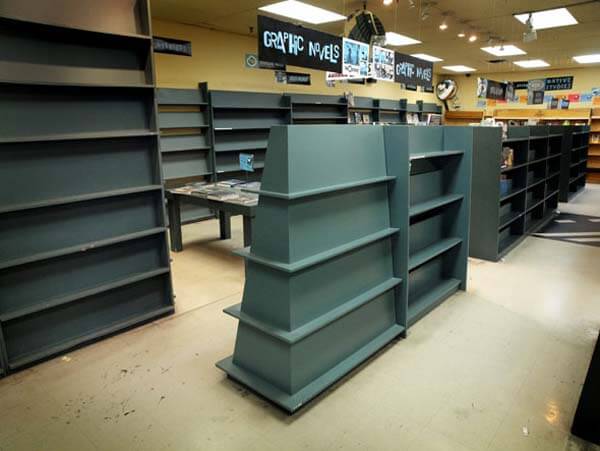
Pages Books' bare shelves in its final days of business. Photo by Rick McGinnis.
On a warm night in early September, several hundred people gathered at Toronto’s Gladstone Hotel to hold a wake for a bookstore.
For 30 years, until its closing at the end of August, Pages Books, located in the heart of the city’s Queen Street West neighbourhood, had been one of the premier destinations for books on contemporary art and cultural and literary theory, while serving as a major conduit for the area’s small press.
As one speaker after another shared their thoughts on Pages’ closing, it became clear that no one is certain who or what will replace the role that Pages played in the city’s literary and artistic community. No one dared suggest the massive Chapters-Indigo bookstore just down the street.
The very fact that so many people came out to lament the closure of a store is a clear indicator of how important independent bookstores have been to their local communities. Yet, for all their social and cultural impact, the future of indie bookshops is in doubt.
The independent bookseller in Canada has had a rough ride in recent years. The disappearance of Pages follows hot on the heels of the closing, earlier this year, of Toronto’s Mirvish Books, perhaps Canada’s most prestigious art bookstore. Vancouver and Halifax have also been hit by a wave of bookstore closures; the once-thriving Duthie’s Books chain in British Columbia is down to only one location closed as of the end of February, 2010.
No fewer than three major upheavals have hit the world of book retailing in the past two decades. First came the big-box book retailers, Chapters and Indigo, now united as a near-monopoly, accounting for some 70 percent of book retailing in Canada; then came the internet and online book sales; and most recently the rise of the eBook, which promises (some would say threatens) to turn the book into yet another piece of software.
It was the first of those upheavals—the big-box retailers— that did the most damage to the independent neighbourhood bookstore. Some 350 indie bookstores closed across Canada in the past decade, and, according to Susan Dayus, executive director of the Canadian Booksellers Association, much of that had to do with the arrival of the Chapters chain.
“Those closures happened very quickly when Chapters opened,” Dayus says. “The leadership of Chapters was very predatory—they opened across the street or kitty-corner to successful bookstores. And those who didn’t have strong financial backing went under.”
Chapters seemed to have tried that strategy with Pages, setting up a sprawling location one block south of the landmark bookstore. But the strategy didn’t work.
“We beat them in the sense that we survived,” says Marc Glassman, founder and owner of Pages. He notes that, as Chapters and Indigo expanded across the city and the internet attracted book buyers, Pages’ own sales continued to climb. What killed Pages, in the end, was the rent. At $270,000 a year, Glassman’s lease was simply unaffordable for a mom-and-pop bookstore.
It’s a pattern that has been repeating itself across major Canadian urban areas. “Vancouver has lost an incredible number of bookstores,” James Mullin, co-owner of Vancouver’s Tanglewood Books, said in an interview last year. “I am literally in the last building in this area that I can afford, and it’s not because of the revenue or that business is terribly poor.” High property taxes and rental costs are hard on Vancouver’s independent businesses he said.
But the CBA’s Dayus says it’s not all bad news for indie booksellers. She points to the recent expansion of Winnipeg-based bookstore McNally Robinson into Toronto, where the store is distinguishing itself by offering not only books but daily events, such as readings and signings. [Update, January 2010 — About two months after this article was originally published, McNally Robinson declared bankruptcy and closed its Toronto and Vancouver locations. It still operates its original store in Winnipeg and a branch in Saskatoon]
“There is space in the market for good [independent] booksellers, those who tweak their product mix to the local community,” Dayus says. “Through the internet, you find the book you were looking for. Through the local bookstore, you find the book you didn’t know you were looking for.”
Glassman agrees. He sees the future of independent bookstores as being “a meeting ground for artists, creators, political thinkers. Chapters-Indigo will never be able to do that. You can’t impose a grassroots sensibility on something that started as a marketing concept.”
]]> Over 1,000 people attended an indoor rally in Victoria this week with high profile speakers from the environmental community discussing the Canadian Government’s approach at Copenhagen. The international day of action on Copenhagen brought perhaps its best attended Canadian event to Vancouver. Downtown Toronto now has an annual rally organized in time for the international negotiations each December, filling thousands on Yonge Street. University students are now leading the campaign for climate justice with Monday rallies at major campuses in Halifax and Winnipeg.
What do these events have in common? They nearly all take place in urban ridings that are held by the NDP or Liberals, with above-average Green support.
While rallies can certainly be helpful, is the geography of climate activism in Canada enough to mobilize the right electorate, and therefore, the federal government?
A new report that hit the press this week confirmed and added urgency to what we all knew — that “the Copenhagen conference is our last chance to stabilise climate at 2°C above preindustrial levels in a smooth and organised way…If the agreement is too weak or if the commitments are not respected, we will be on a path to 5°C or 6°C.”
Sounds like a call to action if I’ve ever heard one.
But the Minister of Environment’s response in one of just the opposite. He called on patience, to wait for perhaps more than two years just for a plan. And of course there have been plans before. Meanwhile, the Conservative Party maintains a strong lead in the polls and Stephen Harper gains strength in his prime ministerial approval ratings. And as this column has said before, he’s our man in Copenhagen…or since he’s not planning to attend, his people are our people.
While the government’s inaction could be answered with any number of pejoratives, we need to focus our days on what will move him.
To borrow a saying from past Animal Alliance – Environment Voters campaigns, politicians understand politics. And politics is about moving the vote. If we’re going to do that — make climate an election issue for the Tories — there will be a real need to target the party’s voter base, and their seats.
So now the tough one: what strategy should we use if we want to do a better job selling climate as a top issue to Conservative voters?
I don’t have the whole answer, but I think we’d better start a discussion and fast. Last week I wrote on the support we must build with people of faith and spirituality. Evangelicals in particular wouldn’t hurt. But there are many more in the Tory voter coalition: big business, small business, farmers, rural Quebecers, Southern Ontario suburban residents, older folk and the Wild Roses.
To target the voters of this country who turn to Harper for leadership, it’s time to show them that it’s just not there on this issue. We have to talk up the harm that dried-up soil and empty wells could mean to rural Canada. And the benefits that a real climate plan could mean in the way of small job creation, and a livable future for their grandchildren.
And we have to spread that message to those not yet convinced, from the Tim Horton’s in Antigonish to church basements north of Kelowna.
]]> [Writer Laura Trethewey recently travelled across Canada by train, and sent us five postcards on the way, from B.C. to Northern Ontario. The “Prairie Postcard Project” chronicles that leg of her trip and the people she met along the way. Visit her blog for the whole story. Click the postcard images to enlarge.]
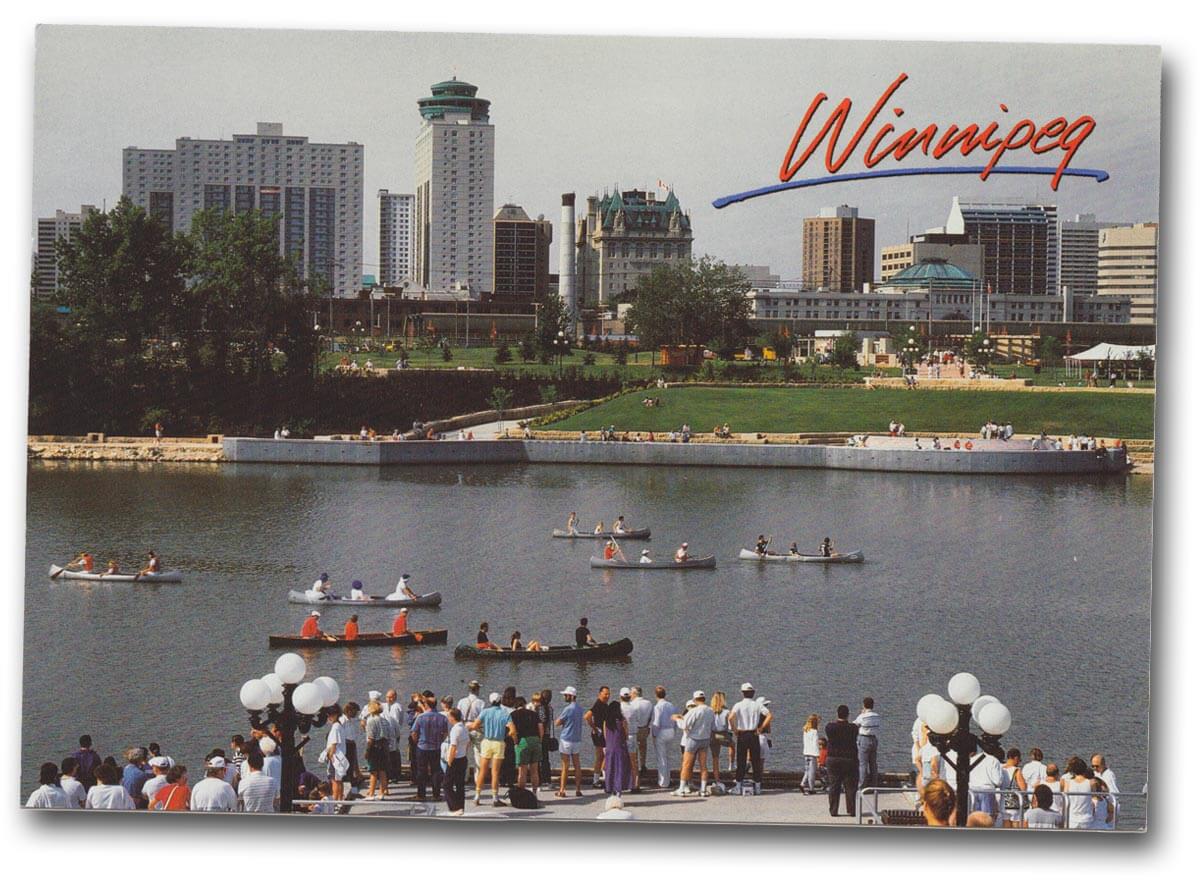
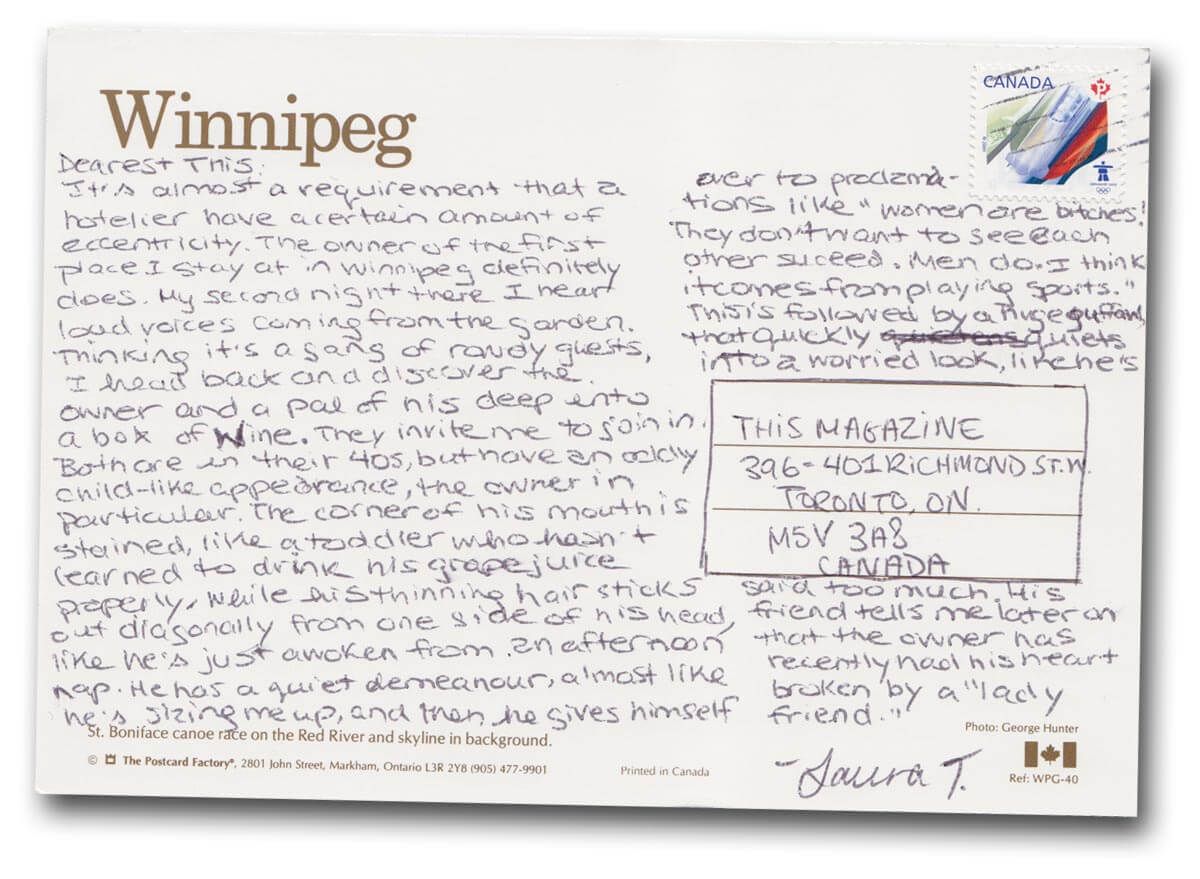
Dearest This:
It’s almost a requirement that a hotelier have a certain amount of eccentricity. The owner of the first place I stay at in Winnipeg definitely does. My second night there, I hear loud voices coming from the garden. Thinking it’s a gang of rowdy guests, I head back and discover the owner and a pal of his deep into a box of wine. They invite me to join in.
Both are in their 40s but have an oddly child-like appearance, the owner in particular. The corner of his mouth is stained, like a toddler who hasn’t learned to drink his grape juice properly, while his thinning hair sticks out diagonally from one side of his head, like his just awoken from an afternoon nap. He has a quiet demeanour, almost like he’s sizing me up, and then he gives himself over to proclamations like “women are bitches! They don’t want to see each other succeed. Men do. I think it comes from playing sports.”
This is followed by a huge guffaw that quickly quiets into a worried look, like he’s said too much. His friend tells me later on that the owner has recently had his heart broken by a “lady friend.”
-Laura T.
]]>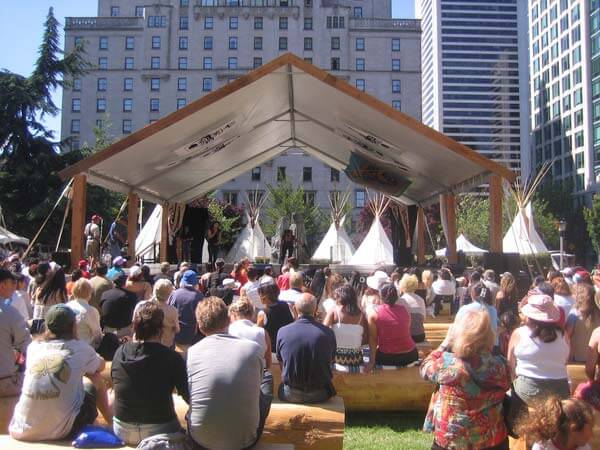
Vancouverites attending National Aboriginal Day events in 2006. Creative Commons photo by Flickr user Freedryk.
It’s only fair that the 11-day Celebrate Canada! festival should kick off with National Aboriginal Day. After all, what better way to commemorate this crazy multicultural mosaic of a country than by launching its celebration in honour of the first people to make it awesome?
We’ve compiled a list of things to see and do this weekend. Just click through after the jump to see the list.
The following is a sample of the weekend’s upcoming National Aboriginal Day celebrations, by region:
Atlantic Region:
Antigonish
National Aboriginal Day Celebrations
June 21, 2009
Paq’tnktk Powwow Ground
Antigonish, Nova Scotia
Contact: Rose Julian, 902-386-2781
Charlottetown
National Aboriginal Day Celebrations
June 21, 2009
Confederation Landing
Charlottetown, Prince Edward Island
Contact: Jamie Gallant, 902-892-5314
Fredericton
National Aboriginal Day Celebrations – Union with our Elders
June 21, 2009
St. Mary’s First Nation
Fredericton, New Brunswick
Contact: Allan Polchies Jr, 506-458-9511
St. John’s
National Aboriginal Day Celebrations
June 21, 2009
St. John’s Native Friendship Centre
St. John’s, Newfoundland/Labrador
Contact: David Penner, 709-726-5902
Ontario Region:
Toronto
Kahontake Kitikan Celebration- National Aboriginal Day Recognition
June 22, 2009, 12:00 – 3:00 PM
St George Campus, University of Toronto
(East side of Hart House)
Contact: [email protected]
Ottawa
Family Fun Day – National Aboriginal Day
Sunday, June 21, 2009, 11 a.m. to 4 p.m.
National Gallery of Canada
Ottawa-Gatineau (NCR)
Web: The National Gallery of Canada
Noongam Traditional Powwow
June 19-20-21, 2009
Dow’s Lake
Ottawa (Ontario)
Web: Noongam Traditional Powwow
Prairies Region:
Calgary
Celebrate Aboriginal Awareness at Heritage Park Historical Village
June 21, 10:00 a.m. – 5:00 p.m.
Heritage Park Historical Village
Calgary, Alberta
Contact: Jo Morris, 403-268-8556
Web: Heritage Park Historical Village
Edmonton
Weekend Festival – Day 1
June 20, 2009 (noon – 6 pm)
Alberta Legislature Grounds, 10800 – 97 Avenue
Edmonton, Alberta
Contact: [email protected], 780-495-6728
Web: City of Edmonton: National Aboriginal Day
Weekend Festival – Day 2
June 21, 2009, 1:00 p.m. to 5:00 p.m.
Alberta Legislature Grounds
Edmonton, Alberta
Contact: Mary Dion, 780-452-6100
Web: Metis Child & Family Services Society
Regina
Regina National Aboriginal Day Celebrations – Wascana Park
Sunday, June 21, 2009 10 a.m. – 10 p.m.
Wascana Park, near Royal Saskatchewan Museum
Regina, Saskatchewan
Contact: Orenda Yuzicapi, 306-596-5131
Web: Regina National Aboriginal Day Celebrations
Winnipeg
National Aboriginal Day – Time to Celebrate
June 21, 2009 10:00 a.m. – 3:30 p.m.
Indian and Metis Friendship Centre, 45 Robinson Street
Winnipeg, Manitoba
Contact: Clayton Sandy (Event Coordinator): 204-945-8319
Web: National Aboriginal Day – Time to Celebrate
British Columbia Region:
Vancouver
National Aboriginal Day Celebration
June 23, 2009, 9:00 a.m. to 5:00 p.m.
745 Clark Drive
Vancouver, British Columbia
Contact: 604-872-6723
Kamloops
National Aboriginal Day – Simon Fraser University (SFU)
June 21, 2009, 10:00 a.m. to 3:00 p.m.
McDonald Park, North Kamloops
Kamloops, British Columbia
Contact: 250-828-9799
Quebec Region:
Montreal
Solstice des Nations – Open to all
June 21, 2009, 10:00 a.m.
First Nations Garden, Montréal Botanical Gardens
Montréal, Quebec
Contact: Land InSights, 514-677-1377 (Info-festival line)
Web: First Peoples’ Festival 2009
Trois Rivières
Benefit day for the future Native Friendship Centre
June 21, 2009, 11:00 a.m.
Espace de créativité émergente l’App’Art, 45 St Antoine
Trois-Rivières, Quebec
Contact: 819-694-1843
Nunavut Region:
Arctic Bay
RCMP Barbeque
June 21, 2009
RCMP Detachment
Arctic Bay, Nunavut
Contact: S/Sgt Steve Wright, 867-975-4413
Iqaluit
Alianait Aboriginal Day Concert
June 21, 2009
Nakasuk School Parking Lot
Iqaluit, Nunavut
Contact: Heather Daley, 867-979-6468
Web: Alianait Arts Festival
A much more extensive list can be found here.
]]>