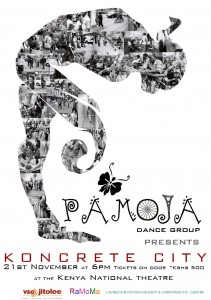
Poster for Pamoja's new dance work, Koncrete City.
There’s a scene in the Kenyan dance company Pamoja‘s new ballet, Konkrete City, where all I could feel was the hectic beat of downtown Nairobi, or Vancouver, or Toronto. The dancers—most of them handicapped—depicted the Central Business District, Kenya’s core of business towers and banks, during the rainy season.
Walking, running and jumping; swinging arms, dreaded hair, legs and umbrellas, they moved to the unnerving beat of techno. The audience at the dusty National Theater of Kenya was so entranced that even the children in the front row, who are usually frightened by this type of music, could not tear their eyes away from the unbelievable shapes of the dancers.
Pamoja means “togetherness” in kiSwahili. Exemplifying that concept, the dancers use each others’ bodies to grace the stage— sometimes lasciviously. During one scene, a man pedals a Kenya-style wheelchair across the stage, while two other men, sitting behind him, roll on each others’ bodies, using necks, elbows and legs as support.
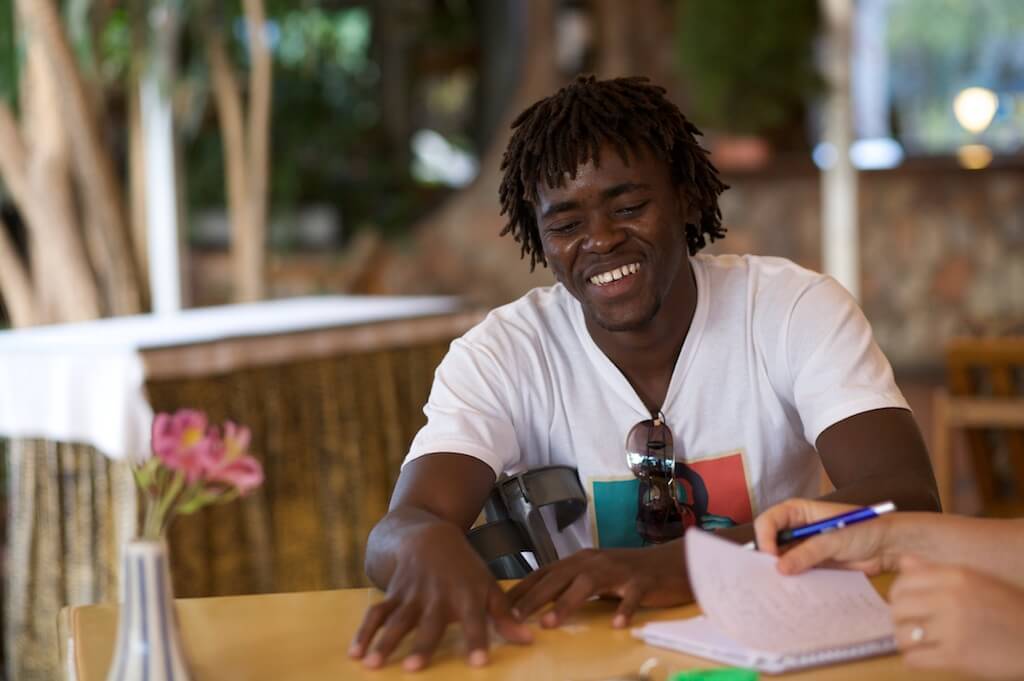
Dismas Otieno, one of the members of Nairobi's Pamoja dance company. Photo by Siena Anstis.
Dismas Otieno, 24, is a long-time dancer with Pamoja. He lost his leg at the age of four when he fell off his bike and into the lethal path of a “flying coffin,” a popular nickname for the big East African buses that roar past you with little regard for human life.
His parents, aware of the new difficulties their son would face, ensured that Otieno completed both primary and secondary schools at institutions for the handicapped. Eventually, as his interest in sports grew during his school years, he moved to Nairobi to pursue this passion.
Overcoming the challenges of living as a physically impaired person in a place like Kenya, notoriously unfriendly to the disabled, Otieno is a national swimming champion and is on the national swimming and basketball teams. He also dances full-time with Pamoja. “I don’t see myself walking on crutches,” he tells me, “I consumed and accepted the situation when I was young.” When dancing, he sometimes spends over two hours on his one leg without a break.
While Dismas is well-adjusted to his situation, he admits that most Kenyans aren’t. “The government sees physically challenged people as a problem.”
In a city like Nairobi, being handicapped is not easy. There is limited wheelchair access in all buildings, elevators are often broken, buses and matatus (the popular van-type of transportation) rarely stop for people in wheelchairs. Being handicapped in Nairobi means relying on the goodness of people with their own problems who are mostly looking out for themselves.
In an attempt to change this attitude, Pamoja has made itself a popular local dance group. Performing at big cultural centers like the Alliance Francaise, as well as in remote communities, where there is even less support structures for the disabled, Pamoja, through its contemporary dance work, helps to convince individuals that there is power and possibility within even the most physically challenged body.
The Kenya Working Group, operating under the University of Toronto, supports people with disabilities in Kenya. You can consult their website here.
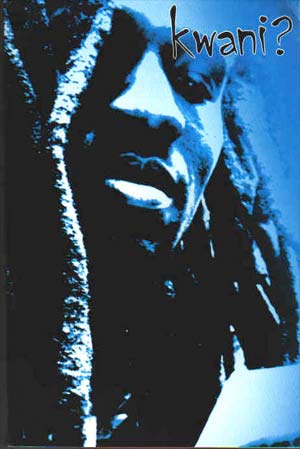
Issue #1 of Kwani?, the journal of contemporary African literature.
Several of my previous blog posts have mentioned Kwani?, the Nairobi literary journal/publishing network dedicated to building contemporary African literature. My interest in the publication was first aroused by the contrasting literary scenes in Uganda and Kenya. While FEMRITE, based in Kampala, Uganda, is a strong local writers’ organization, I never found a literary magazine like Kwani? in Eastern Africa, which offered everything the local and foreign reader could want: fiction, non-fiction, poetry, illustrations—all dealing with the world that is Kenya from a hundred different perspectives.
So, when I was first introduced to Kwani?, I could not let go. Since then, I’ve learned a lot about the role of literature in the development of a national psyche, particularly in post-conflict situations. Words have a way of immortalizing moments that are otherwise easily swept under the rug forever. In this sense, we are indebted to the artists that immortalize these events and ensure their recognition in the long-term, whether political, economic or social. As Kahora says, “writers are society’s conscience.”
In Kenya, this has been particularly important. The post-election crisis could have become just that: another post-election crisis. Previous elections have been bloody. Previous elections have been rigged. Previous elections were built on empty promises and on bought votes. But through literature like Kwani?, perhaps there is an acute awareness among the public that this is not just another post-election crisis. This was the final straw.
The last two issues of Kwani? focused on the post-election crisis, making an indelible impression on readers. The goal was to record in pictures, cartoons, poetry, fiction and creative non-fiction what happened in the first 100 days of 2008. As Kahora says, “One of the big problems we’ve always had is a problem in recording momentous events in this country which leads to a widespread amnesia; such a record, makes sure there is no excuse, at least from a literary community’s viewpoint, for the kind of behaviour [during the post-election crisis].”
Consequently, Kwani? also wants to focus on the younger generation of Kenyans and their aspirations for the country as ‘leaders of tomorrow.’ Kahora says that the next issue of Kwani? will focus on “youth expressions—as a way of going deeper into the 46-year-old malaise [Kenya] is suffering…re-evaluating who we are and what directions we are heading in.” Closer to the 2012 elections, Kahora says Kwani? will use the magazine “as [a] way of making people remember.”
Among youth, the coming generation of Kenyan leaders and doers, Kahora says that Kwani? represents “a younger un-texted space that falls outside of official narratives, that can be written into being.” Kenya is a country saturated with stale political narratives that never seem to change, published day to day in the big local newspaper, The Daily Nation. Kwani?, though perhaps only drop in the bucket in the long-run, offers youth, and other Kenyans, a means of looking beyond the mainstream and writing out a new idea of Kenya. Perhaps, through this process, some of these aspirations will become reality.
]]>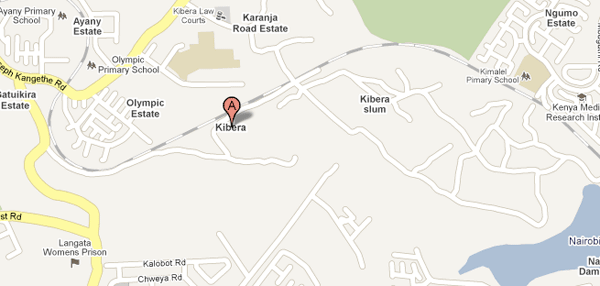
Google Map's incomplete data for Kibera, among the world's largest slums. An open source mapping project aims to provide a clearer picture.
Kibera, one of the world’s biggest slums, is a “glaring omission” on Google Maps, says Erica Hagen, member of the Map Kibera team. Indeed, Kibera remains a blank spot in relatively well-mapped and densely populated Nairobi, the economic hub of East Africa.
When I first heard of this project, my first thought was of the potential harm that mapping this area could do. Would the government highjack the data, mapping and labeling households by ethnicity? Of course, all technology has pitfalls. Remember the use of cell phones during the Kenyan election crisis to spread hate? It would serve Map Kibera well to monitor how the government and local political groups use this new information and for what means.
Regardless, mapping Kibera does have some expected benefits. As Hagen points out, community groups are willing to participate because they think having a geographical marker might make service claims to the government easier. There would be a visual representation of where schools, clinics and water delivery services, for example, are missing.
In a community saturated with development organizations, mapping might also better situate who is working where and potentially help avoid overlaps between groups. For Westerners, it is a practical matter of being able to navigate the complex community they do not belong to, but so desperately want to volunteer in.
Google Maps brings us visual representations of the nooks and crannies of the world we would probably never have time or money to visit. This points to another advantage of mapping Kibera. Hagen is working with a group of youth who produce short clips of their community and upload to YouTube. By linking these clips to different areas of Kibera on a map there is the potential to better educate and situate Kibera for the aid-giving Westerners who see the region as in need of saving.
Kibera has been mapped before, says Hagen, who met with volunteers who had mapped the whole district for another non-governmental organization. However, they never saw the results. This time, Map Kibera wants to do things differently. Hosting the map on Open Street Map (an open-source software which the public can edit) allows others to contribute to the mapping of Kibera.
Map Kibera has also hired twelve local youth, most having just finished their high school degrees, to walk through the community with GPS devices and identify the streets, alleys, clinics, schools and so on in the area. She hopes that after this training, they will be able to spread the word (both through printed maps and the off-chance of Internet access) and ensure community engagement. “Sustainability is always difficult,” says Hagen, but she assures me that Map Kibera is working with local organizations like Ushahidi.
Stay updated for further initiatives after the initial mapping to be completed in three weeks on their website.
]]>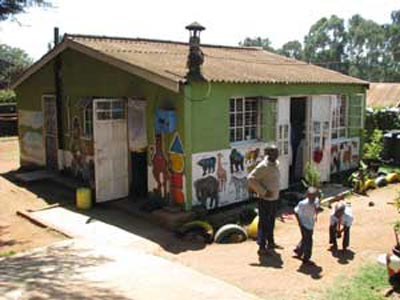
The Greenhouse Preschool in the Kibera slum, Nairobi, Kenya. The school aims to improve the quality of life for disabled children in the neighbourhood. Photo courtesy Deaf Aid
Patrick teaches at the Greenhouse Pre-School in Kibera. Tucked into a sunny courtyard, the school is not typically representative of Kibera, the largest slum in the world and often used to represent Kenya’s “darker” side.
The 25 students Patrick teaches are deaf. While they might be silenced to the busy noise of the surrounding city, as I enter the school grounds, one can immediately tell their determination and curiosity through a flurry of questions articulated in sign language.
The school, founded by Deaf Aid, a Norwegian-funded non-governmental organization working with deaf children in the country, was opened in 2006. What appears to be the only institution like this in the region, Greenhouse takes in deaf children of all ages and backgrounds and help them work through all standard kindergarten material, including English, kiSwahili, math and sign language.
In Kenya, special needs children are often seen as ‘bad omens.’ Children are sometimes left locked up their houses, ostracized from the world around them. A 2007 report claims that approximately three million people with disabilities, which includes deaf individuals, in Kenya are also having their rights violated through limited access to employment, wage inequity, sexual harassment and theft.
Shiro Muiruri, who works in early childhood education/development, tells the story of one little girl who was locked in her house day after day as her parents left for work. The neighbor would come over and rape the child. The girl, unable to communicate with her parents, was left in this desperate situation for years. Eventually, she was introduced to Deaf Aid. She has now learned sign language and can express what she went through.
The school focuses on early childhood education. This type of “pre-school” education we might take for granted in Canada is key to the proper development of the child and his or hers success in primary school. Up until now, there existed few options for parents who wanted to prepare their deaf children for future education, particularly for families living in poor areas like Kibera. The Greenhouse program, which hopes to provide primary and secondary schooling in another region, Kisii, is filling this gap.
Deaf Aid pays for most of the costs of the 300 children under its care. A portion of these children, the 25 at Greenhouse, pay nothing at all and are given pre-school training while the others are sponsored in primary and secondary schools, both integrated and for deaf children only, around the country. These “integrated” schools are generally government owned and operate alongside “mainstream” education by providing special needs students with extra attention while ensuring they remain a part of the regular system.
In order to reach out to the parents of deaf children, and ensure that the mentality of deaf children as “useless” is eradicated, Deaf Aid also teaches parents sign language every Saturday afternoon. As many of these parents come from very poor backgrounds, Deaf Aid also offers lunch money and bus fare to the Greenhouse parents – primarily from the Kibera, Kawangware and Mukuru slums – to learn new “life skills” such as tailoring, hairdressing and knitting. During the holidays, the school hosts open classes which bring together deaf children and their hearing siblings. By November, Deaf Aid also hope to host a mobile “hearing clinic” to target Kibera and rural areas outside Nairobi. This will help ensure that diseases causing deafness are caught early and that deaf children are given the necessary treatment.
Despite these projects, the situation for specials needs children in general in Kenya continues to look bleak. According to the Ministry of Education Science and Technology in Kenya, in 2004 there were 750,000 special needs children at primary school going age with only 26,000 enrolled. The government has reaffirmed its objective to help integrate special needs education and OVCs into the mainstream educational system through its “Education for All” initiative launched in 2003. However, these children continue to remain marginalized.
There are many barriers to integrating special needs education. One notable challenge is cost. An article from IPS News highlights that: “The cost of educating a child in a private institution that caters for special needs ranges from about 192 to 641 dollars per term – a considerable expense in a country where, according to the United Nations Human Development Report for 2003, about 23 percent of people live on less than a dollar a day.” As stated in a report for the Commonwealth Education Fund, “low enrolment [of special needs children] has been caused by high costs of providing adequately trained teachers and other support personnel, specialized equipment and instructional materials.”
The Greenhouse pre-school model, as well as its expansion to primary and secondary school classes, offers both good and bad. While the cost of enrolling children in the school is high, Deaf Aid promises to cover most of the children’s costs. However, it also makes for a potentially unsustainable model that is not fully government-supported and therefore more difficult to mainstream in the long run. Second of all, while schools like Greenhouse offer targeted, high quality education to deaf children – and in the long run ensure that their disability turns into an ability – they also separate these children from the “mainstream,” which could reinforce existing stereotypes.
Yet, Patrick’s story — of growing up deaf in Kenya and of now being married with children — is admittedly rare, but perhaps will increase as Deaf Aid expands its services from a pre-school to a secondary: The latter is planned to open soon in Isinya in Rift Valley Province.
]]>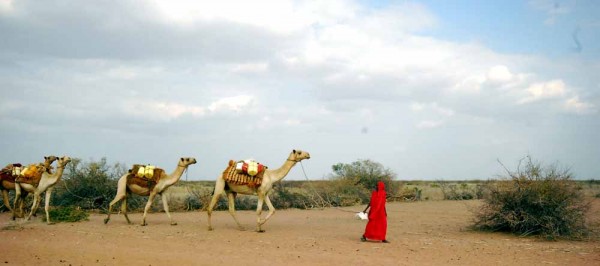
A nomadic Somali woman leads her camels in the drought-afflicted north of Kenya. Photo by Siena Anstis.
The drought in Northern Kenya this year is severe. Farah Olad, the Deputy Chief of Party of Education for Marginalized Children of Kenya (EMACK), an organization which works with Somali pastoral communities, tells me grey is the “color of death” in this rural region.
And the whole landscape is grey: from the ground to the pinky-sized thorns on the low-lying trees that populate the desert. Within minutes of leaving the paved highway leading out of Garissa, the biggest city between Nairobi and Mogadishu, I am greeted by the ominous sight of two dead goats.
Northern Kenyans are primarily pastoral ethnic Somalis. Many call the region “the forgotten Kenya” and characterize it as under the partial authority of wealthy Somali businessmen.
For centuries, these nomadic groups have crossed the borders of Ethiopia, Kenya and Somalia with little regard for politics. Their one mission, to maintain their herd, was fulfilled through the graces of nature and a predictable climate: long and short rainy seasons, as well as a limited dry spell.
However, climate change has brought new challenges: an extended dry season, no short rains this year and the potential of an El Niño long rain accompanied by violent flash floods in December.
Pastoral communities are aware of the ticking time-bomb that comes with their lifestyle. While, as Olad says, most would herd their goats, cows and camels into the depths of a war-torn country like Somalia to maintain their livelihood and culture, many understand that their lifestyle will not suffice for all. Increasingly, pastoral communities rely on the capacity of the uninterested central Kenyan government to deliver relief services and help them build alternatives to their unstable lifestyle.
One way of addressing this problem—and ensuring equitable representation of Somali Kenyans within their host country—is through secular education. Education offers alternatives: it gives children the possibility of thinking for themselves, as a part of a wider Kenya, and ensuring that they understand that there are choices. However, as families move year-round, there is little means for a child to access the formal primary school system.
Through mobile schools, the Nomadic Heritage Association (NOHA) and EMACK, are attempting to bring the next generation of nomadic Somalis this choice. They foresee the escalating difficulties pastoralists will face as potential “climate refugees.”
Each nomadic community is made up of an average seven households, all led by a head man. These communities follow pasture and water with their herds. Mobile schools follow these communities. As Islamic education is key to Somali culture, each group already has a dugsi, or an Islamic learning school, which occupies a majority of young children’s time along with daily chores. Secular education is slowly being introduced through the mobile schools, which provide teaching materials and offer the opportunity to train a teacher from the community.
Classes focus on English, Kiswahili, and Math. In one mobile school, most children have learned to write their names. Their exercise books are filled with neatly drawn figures and calculations. For a community that has been illiterate for generations, this is a significant change. Many would call it self-empowering. As Olad says, “It is not about changing culture, but about strengthening existing culture.” The latter part means ensuring that Somali communities can maintain their culture through a network made of a younger generation who speak the languages of both their Somali homes and of Kenya at large.
For more photos, please visit Welcome to “Forgotten Kenya.”
]]>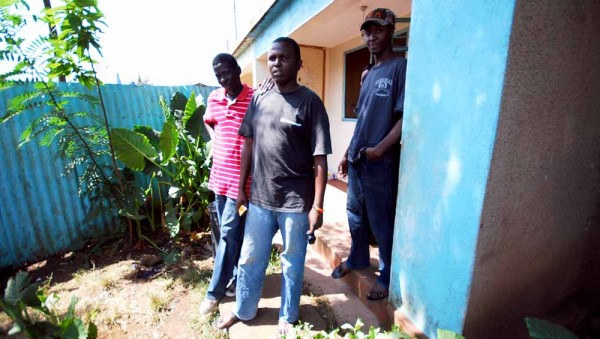
Members of the Obunga Youth Group in Nairobi's Kisumu slum. Photo by Siena Anstis.
The Obunga Youth Group sits on the edge of the biggest slums in Kisumu, the main city in the Nyanza Province of Western Kenya, and the epicentre of post-election violence. This week they held a forum and how to move beyond that horrific episode. With 12,000 people living on less than $1 a day, the slum is not only a humanitarian disaster, but was also a breeding ground for the dissatisfied rioters who looted Kisumu in 2008.
Steve, a student from the University of Nairobi who was born in Obunga, is quick to point out the economic roots of violence. “The election was about class, the divide between rich and poor,” he explains. The Hindus and Kikuyus in the region seem to have acquired much greater wealth than the Luo, who are the major ethnic group in Western Kenya. It is not that ethnicity is a dividing factor in Kenya—all in the room agree that they are aiming for a united Kenya, without ethnic divisions—but these ethnic groups form social networks based on trust and family which eventually acquire greater wealth than others, in one form or another.
The riots were an opportunity to protest perceived injustices against the poor, both by government and by the wealthy, in Kisimu. As Mwai Kibaki claimed the elections, the community mourned the loss of a President from their region—Raila Odinga—and resorted to rioting to “release frustration,” but also to protest the government. Television broadcasts showing the wreckage in Kibera, Nairobi’s largest slum, further incited an uprising.
Even now, a year after the post-election violence, the air is heavy with criticism and comment. Recently, the Kenyan government opted for a Truth, Justice and Reconciliation Commission (TJCR) to deal with the post-election violence. While there is some merit to this approach in that it might foster some necessary dialogue, 68% of Kenyans favour trying offenders at the International Criminal Court.
Members of the Obunga Youth Group have a clear understanding of national politics. Emmanuel sees the ICC as a neutral ground in which government leaders—the big wigs of the post-election violence—will be impartially tried. Without this neutral ground, he suspects the outcome of the commission to be a further dividing factor as communities claim that indicted members were favored or punished by the government.
Others favour a local tribunal which would be partially overseen by the ICC. These young men voice hope that Kenya will use the opportunity “to learn from the violence” and alter their constitution to ensure that the President is not beyond the rule of law. They hope that a local tribunal will increase Kenya’s capacity to deal with its own problems. They also hope it will spur reform within the government.
While they highlight the merits of face-to-face dialogue brought by the TJCR, most believe that this option will allow the government to duck out of the mess they created and continue a regime of corruption and misinformation. Fred points out that previous “commissions,” such as that appointed to deal with the Anglo Leasing scandal, were largely useless as they failed to incorporate the public in the process and ultimately became a dead end.
Yet, despite the enthusiasm and drive to develop a connected Kenya, there remains the divide between government and local communities. “We must reach a point where we are proud to be Kenyans,” says Fred.
]]>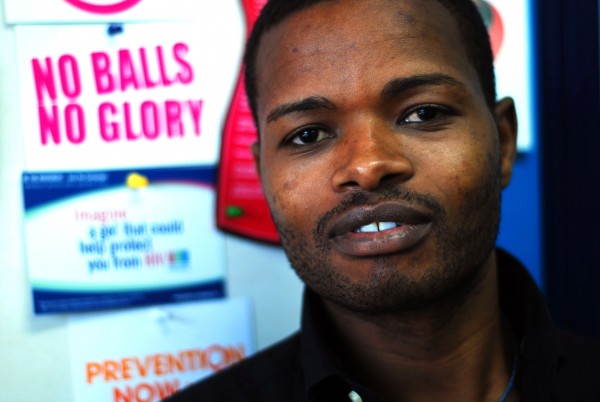
John Mathenke, a Nairobi sex worker, was diagnosed with HIV in early July. He has gone public with his story and started a health education organization to help other young gay sex workers avoid contracting the disease. Photo by Siena Anstis.
John Mathenke was once arrested for being gay but, after failing to pay the customary bribe, was forced to have sex with the policeman. He had an orgy with a priest who publicly excoriates homosexuality, along with five other Masaai boys. And his Arab trader clients curse him during the day, but come back looking for sex at night.
Such is the life of a homosexual prostitute in Nairobi, Kenya. “It’s better to be a thief than a gay in Kenya,” he says. Both are often punished by death, but being the latter means never revealing yourself to the public and remaining perpetually closeted. It means dealing with homophobes at day and pleasuring them at night.
Mathenke, a quiet-spoken young man, is forthright with his story. His gay identity has not been shamed or hidden by years of abuse. His ability to tell his intimate story to a stranger is testament to his bravery. He tells me that he wants to be openly gay – and to help those who want to do the same – in a country where all odds are stacked against him.
His forced silence is not only affecting Kenya’s gay population. According to the BBC, gay men in Africa have 10 times higher HIV rates because of homophobia. These gay men often have “cover wives” who are also eventually affected by HIV. It’s a vicious cycle in a country where the government has proved reluctant to address the mental and physical repercussions of homophobia.
In 2002, Mathenke left his poor community and followed other dream chasers to Nairobi. He paid a barber $30 to be trained as a haircutter. His perfect English eventually landed him a job selling textbooks in a lavish Westlands shopping center. This was the scene of his first same-sex experience. While, subconsciously, he knew it had always been a part of him—he says he used to wear long shirts when he was small and tied a rope around his waist to pretend it was a dress—he had never experienced sex with a man.
A Frenchman would come in, day after day, he says. He would open thick African history books and look at pictures of naked men. He bought many books; some that Mathenke would help him carry to the car. He never thought much of this flirtation, until the man took him out for dinner. Inebriated, they went back to the Frenchman’s home and had sex. The man took him home almost every night after that. In the same store, Mathenke encountered the priest with whom he had a five-person orgy.
At this time, Mathenke was discovering his sexual identity and decided to move to Mombasa, an area rumored to be less hostile to gay relationships. $700 in his pocket, he put himself up in a hotel. Eventually the money dried up and he was left desperate. He went to Mercury, a local bar, and was offered money for sex with an older European.
“When you’ve had sex with someone once, they don’t want you again,” explains Mathenke. Customers became few and far between and he continued to sleep on park benches, washing in the seawater in the morning. He also faced continued stigma: “Arab traders would insult us at day, and come looking for sex at night.” A lot of his clients were—and are—popular religious leaders who would curse homosexuals in public and find pleasure in paid homosexual company in private.
Mathenke eventually returned to Nairobi, where he settled in with a new boyfriend. He continued to see clients from the big hotels: the Hilton, the Serena, the Intercontinental. He had yet to use a condom.
Community outreach by Sex Workers Outreach Program (SWOP) in Nairobi eventually led him to his “second-home.” Provided with free health services and counseling, he tested positive for HIV/AIDS three weeks ago. So did his partner. Instead of bemoaning his future, Mathenke has launched himself into a new project. He is bringing together groups of young gay sex workers and helping them form an advocacy organization, Health Options for Young Men on HIV/AIDS. He is teaching these young men—some only 12 years old—about using condoms and lubricant when having sex with men.
Mathenke’s work is necessary. Many of the bars and hotels on the coast and in Nairobi are, by default, gay bars. The men frequenting these places pay off the police so that they’ll be left alone. But violent raids continue to happen. At the same time, homophobia ensures that these men are never reached by HIV/AIDS awareness. Changing public behavior is key to lowering the HIV rate and protecting all Kenyans, gay or otherwise.
While the government has long been reluctant to address the role of homophobia in increasing HIV/AIDS rates, there have been some positive changes over the years. Gloria Gakaki, a social worker at SWOP, highlights the brave role of Dr. Nicholas Maraguri, Head of the National AIDS and STD Control Programme (NASCOP), who is pushing the government to address HIV among Kenya’s hidden gay populations. Maraguri has also been meeting directly with male sex workers to get a more in-depth idea of what their problems are, and how government can help.
For further information on SWOP or to donate to Mathenke’s new organization, please contact Gloria Gakaki at [email protected].
]]>